


BY MATTHEW TAKAONA
The best and most effective way of recording history is to name places, roads and buildings after people and events.
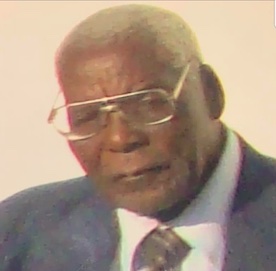
The late Simon Jeffa Mutero is synonymous with Mutero, one of the biggest Roman Catholic Missions in Zimbabwe. Simon Jeffa almost single-handedly saw the establishment of this grand institution in Gutu.
The sad part however is, with the passing of years few remember his work. Current students at Mutero don’t even know his name. Few parishioners would not give a coherent account of what Simon Jeffa did to the mission.
As a Catholic myself, a journalist, a community player and an enthusiast of local history, I find no greater honour and immortalisation of history than naming a prominent object at Mutero Mission after Simon Jeffa Mutero. Of course, that naming must be out of merit and deserved.
This is my appeal to the bishop of the Catholic Diocese of Masvingo and the Church. What I appeal for is not only an honour to a man who did so much for God and the community but is also a way of preserving history and bringing to the fore great works that can inspire other Catholics.
Few would know that Mutero Mission started off as Chihon’ a tiny learning center for the Dutch Reformed Church (DRC). DRC closed the small school after clashes with parents and one of those affected was Simon Jeffa who found himself out of school.
This saw Simon Jeffa making a long journey to Gokomere Mission to continue his education. These were the days when there was no road transport.
One day during Catechism at Gokomere, Simon Jeffa and another boy from the Mutero area Celestino Gadzira Marimi approached Father Schoenenberger and told him of the need for a school in their area. The Father Superior ordered Father Winterhalder, Simon Jeffa and Philip Musiiwa, a student from the same area on a 140km bicycle journey to Mutero Village to assess the situation.
At Mutero Village, Jeffa introduced Fr Winterhalder to Chagwiza, his uncle who was the chief. He also arranged accommodation for the priest in the village and ensured that his stay was comfortable for the several weeks that he was assessing the area.
Fr Winterhalder submitted his work to the Native Commissioner for approval of the building of a school and this was granted. A few weeks down the road, DRC contested the approval arguing that the proposed school was too close to its schools in the area.
Father Superior gave up on the project but Simon Jeffa was determined. He offered to go back and measure the distance between the proposed Mutero school and the DRC schools to prove that the distance met the requirements.
He cycled back and used a 100m rope to measure the distance between the site and the closest DRC schools, namely Guzha and Chesvingo in ward 19 and 21 respectively being helped by his young brother Claudios who was only doing Standard 1. It was a tedious process taking measurements of up to 15km for each school using a rope.
The findings were submitted and again Government approved the school.
Around 1942, Simon Jeffa was tasked by Father Superior to start catechism. Moulding of bricks for the school started in 1944 but in 1948 the school was razed to the ground by a storm and all teachers left.Simon Jeffa who was teaching at Gokomere was then asked to go and rebuild the school. In 1949, he doubled as a teacher and head at Mutero. The school developed fast because of his able leadership and popularity in the area.
In 1956 when higher primary school was introduced, Simon Jeffa handed over leadership to Sister Josephine who became the headmistress.
He retired in 1990.
There are of course several other people like Fedilis Chivasa, Wilfred Mabhari, Leornard Zengeya and former Zimbabwe Vice President, Simon Muzenda who played roles in the establishment of Mutero but without Simon Jeffa, Mutero would not have been there.
It is only fair for history to remember his great contribution to education and the spread of Christianity in this country.

Informative article, totally what I needed. xnxx