
CATHERINE MUROMBEDZI
CORRESPONDENT
CLINGING tightly to metal roof racks alongside sacks of grain and luggage, passengers precariously balance atop an overloaded kombi as it lurches over rough terrain along the road to Nembudziya. In Gokwe North, riding on a vehicle’s roof is no reckless stunt. It is the desperate reality of rural transport scarcity on a battered road network where covering just 66 kilometres from Gokwe Centre takes two and a half gruelling hours by bus. Translate this to a sick villager from the furthest clinic 110-kilometre away, the ordeal to reach Gokwe North District Hospital on a motorbike ride, with no helmet is a life-and-death experience.
While national health policy recommends that communities have access to a primary health care clinic within a 10-kilometre radius, vast geographical expanses and degraded dust roads become severely compromised when the rains fall. The out of pocket costs are prohibitive to many, hence majority seek health care late. Distancd pushes life-saving care far out of reach for many rural families in Gokwe North District. For an expectant mother, a child with a high fever, or a woman quietly battling early symptoms of cervical disease, distance in Gokwe North is not a mere figure on a district map.
Iit is a formidable barrier that often dictates whether an illness is caught in time or turns fatal.
To bridge the critical gaps, the National AIDS Council (NAC) has partnered with Gokwe North District Hospital through the Ministry of Health and Child Care to decentralise cervical cancer screening and integrated HIV services to the communities. They are taking vital medical care directly into remote wards and sparing rural women the costly, exhausting, and perilous journey to central facilities.
During these mobile visits, NAC-supported outreach teams deliver a comprehensive package of care that includes Visual Inspection with Acetic Acid and Cervicography (VIAC), HIV testing, blood pressure checks, and diabetes screening.

Maximising the reach of every community visit, Gokwe North District Hospital complements these efforts by integrating routine childhood immunisation, baby weighing and nutrition education and family planning services. The outreach stops become hospital services to the community, turning a single mobile clinic into a one-stop health hub for entire families.
Ahead of the December 1 World AIDS Day commemorations set for Chachacha in rural Shurugwi, the stark realities of healthcare delivery in outlying districts in the Midlands Province came into sharp focus.
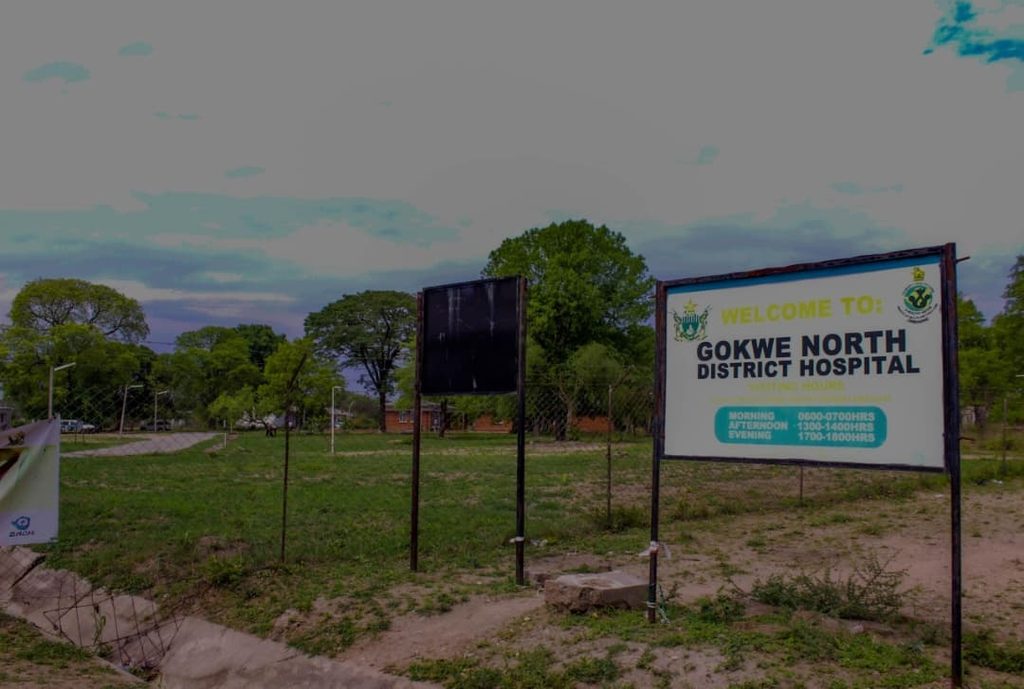
Gokwe North District Hospital, situated at Nembudziya growth point, serves as the main referral centre for 28 health facilities scattered across a rugged, sprawling landscape. For decades, women living in far-flung wards who needed Visual Inspection with Acetic Acid and Cervicography (VIAC)—a vital, low-cost screening method used to detect precancerous changes on the cervix distance is a barrier. Where they had to walk all the way to the district hospital or ride on a motor bike without any helmet, mobile outreaches become the saviour.
Faced with scarce transport, unaffordable bus fares and punishing road conditions, many simply stayed home.
Recognising that centralising care was leaving thousands of rural women vulnerable to preventable cervical cancer, NAC stepped in by procuring a modern VIAC camera for the district to replace one that had broken down some years back.
This equipment has empowered health teams to move beyond the hospital walls and conduct mobile screening outreaches right inside rural communities.
NAC Gokwe North District AIDS Coordinator Trichard Ncube explained that detailed district needs assessments had flagged long travelling distances as one of the single biggest obstacles preventing women from accessing timely screening.
“Through their life-saving partnership, NAC and Gokwe North District Hospital are bringing vital screening straight to remote villages—tripling reach and proving community collaboration conquers distance.”
“Having conducted needs assessments within the district, we realised that there was a challenge in women accessing VIAC services. The services were centralised at the district hospital, making it difficult for women from distant communities to access them,” Ncube said.
By equipping the district with a mobile-ready VIAC camera, NAC and the Ministry of Health and Child Care have fundamentally changed how many women are reached each month.
“Statistics show that an average of 30 women access VIAC services at the district hospital, including walk-in clients and referrals from health facilities,” Ncube noted.
“However, through the outreaches that we conduct, more than 200 women are accessing the service. This shows the impact of taking services closer to communities.”
He emphasised that early detection remains the cornerstone of saving lives, as precancerous cervical lesions can be treated quickly and effectively before progressing into invasive cancer.
“Early detection is important because women are able to get assistance and treatment early. We want to ensure that people do not have to travel long distances to access these essential services,” he added.
Screening numbers surge through community outreach mobile clinics.
The impact of decentralising services is already reflected in Gokwe North’s annual health statistics.
At least 795 women have undergone cervical cancer screening across the district since January 2026. This is nearly fourfold increase from the approximately 208 women screened throughout 2025.
Gokwe North District Nursing Officer (DNO) Caritas Mbombe said nearly half of all clients reached this year accessed screening in their own localities through community outreach drives rather than travelling to Nembudziya.
“From January 2026 to date, we have screened 795 clients, 394 of whom were reached through outreach programmes conducted across the district,” DNO Mbombe said.
Of the 795 women screened, 11 tested positive for precancerous lesions and were linked to timely care at the distrct hospital. Alongside VIAC screening, the district is also conducting Human Papillomavirus (HPV) DNA testing—a highly sensitive molecular test that identifies high-risk strains of the virus responsible for almost all cervical cancers—through which 91 women have tested positive and been placed on clinical follow-up.
For DNO Mbombe, the success of these mobile clinics lies in the stark geography of the district and the grassroots network that mobilises women long before the hospital vehicle arrives.
“The district has 29 facilities, and the furthest is 110 kilometres away. It makes travelling to this hospital very difficult,” DNO Mbombe explained.
“The outreach programmes help a lot, and we find many women waiting to get screened by the time we arrive. Village health workers are our eyes, ears, and mouth—they are the bridge between facilities and us.”
Because women living with HIV face a significantly higher risk of developing cervical cancer, NAC has woven cervical screening into a broader, integrated package of rural health interventions. In its 2026 budget, the council allocated US$47,800 towards treatment, care and support.
“Our district is big, people travel long distances from where they live to access services at health facilities. We also identified challenges in accessing antiretroviral therapy (ART) medication,” Ncube said.
“Therefore, we support the Ministry of Health and Child Care in conducting opportunistic infections and ART outreaches, which enable people to access services where they live.”
These integrated outreaches allow health teams to offer viral load testing, ART refills, and cervical cancer screening during a single community visit. NAC is also running a targeted support programme for children living with HIV to strengthen treatment adherence and help the district achieve the third 95 target, ensuring that 95 percent of all people receiving antiretroviral therapy achieve viral suppression.
According to Ncube, every outreach deployment is guided by regular joint data reviews between NAC and Ministry of Health officials at facility and district levels, ensuring resources follow actual community needs under a whole-of-government approach aligned with National Development Strategy 2 (NDS2).
Early treatment and persistent operational bottlenecks are thus addressed.
For women whose screening reveals early precancerous changes, proximity to treatment is equally critical. Rather than facing an intimidating and expensive referral to a distant provincial hospital, patients diagnosed with early-stage lesions can receive immediate treatment right at Gokwe North District Hospital.
“If detected at this stage, we use a freezing method called cryotherapy,” DNO Mbombe explained.
“It is a targeted, minimally invasive treatment that freezes and destroys abnormal tissue while sparing surrounding healthy structures.”
Only patients presenting with advanced abnormalities requiring specialised surgical or oncological intervention are referred onward to the Gweru Provincial Hospital for expert centred management
Yet despite the encouraging surge in screening numbers, frontline health workers warn that persistent operational bottlenecks continue to limit how frequently they can reach the district’s furthest corners.
DNO Mbombe noted that while Gokwe North has five nurses trained to provide cervical cancer screening, competing demands across hospital wards mean they are frequently deployed to other departments. Sometimes leaving only two trained nurses available to run both static clinic duties and mobile outreaches.
“When our team goes out for outreaches, it means there are no VIAC services at Gokwe North Hospital. Anyone visiting on that day is disadvantaged,” said DNO Mbombe.
Transport shortages for the District Hospital pose an equally pressing hurdle. With limited operational vehicles available to cover 28 dispersed facilities over punishing terrain, health teams struggle to consistently integrate cervical cancer screening with routine childhood immunisation and HIV outreach schedules—a challenge that becomes even more acute during the rainy season when dust roads deteriorate rapidly.
“We are grateful, NAC supports the outreach teams and monthly, we hold between five to ten mobile clinics. The communities come out in their numbers,” said DNO Mbombe.
For hundreds of rural women across Gokwe North, the arrival of the mobile VIAC team in their ward represents a quiet transformation in public health equity. By taking diagnostic technology across broken roads and straight to the doorstep of underserved villages, NAC and Gokwe North District Hospital are proving that geography need not determine a woman’s survival. A bad road or an unaffordable bus fare no longer has to stand between early detection and a saved life.
Feedback: [email protected]