


CATHERINE MUROMBEDZI
HEALTH CORRESPONDENT
The National Aids Council’s (NAC) initiatives in Midlands Province are showing positive outcomes in addressing the HIV epidemic, particularly in mining areas.
Health science journalists on a NAC sponsored tour had first hand appreciation as they interacted on the ground with miners, traditional leaders, councillors, the community at large and sex workers.
NAC’s approach involves training peer educators who then go on to mentor fellow artisanal miners, promoting responsible behaviour, HIV testing, and adherence to treatment.
The programme has encouraged small-scale miners to access HIV and AIDS-related services, which is crucial in reducing new infections.
The tailored interventions by NAC are bearing fruits, by engaging men and promoting peer-led education, the programme is helping to create a more supportive environment for HIV prevention, treatment, care and support.
The National AIDS Council’s (NAC) peer education and outreach efforts are positively impacting artisanal miners’ lives.

Robert Chouchi, from Sannyati, an employee of Amo Mine, Gokwe South says he is better off employed as it guarantees him wages.
Miners report increased awareness and behaviour change, reduced STI cases, and a greater willingness to get tested for HIV. They appreciate the peer educators for providing critical information at their workplaces, overcoming barriers to accessing health services. The miners express a need for more condoms to sustain their newfound behaviours away from their wives.
NAC’s interventions have led to improved health outcomes and increased confidence and empowerment among the miners. This has promoted healthier behaviours and access to critical health services, making a significant difference in their lives. Artisanal mining is back breaking work, one needs to be strong and healthy.
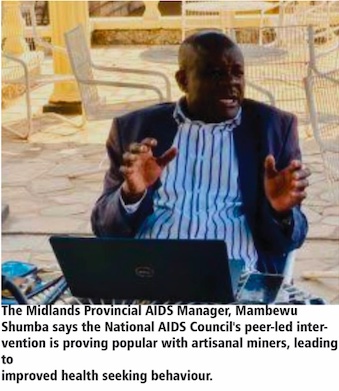
Mambewu Shumba the Provincial Aids Manager for Midlands Province, said new infections were higher among the highly mobile populations.
“Artisanal miners are highly mobile.When they hear that a gold belt (chaputika) is yielding good returns in Zvishavane, they rush there. They don’t have time to pack or prepare, they just get onto the next bus. Sex workers, too, they are highly mobile and are found where there is money. They also rush to offer their services there. As the National AIDS Council and partners, led by the Ministry of Health, we go down to the community to offer our services. Artisanal miners have no time to visit the clinics. Their health seeking behaviour is very minimal, they only come when severely ill,” said Shumba.

Shumba, all the way from Masvingo, recently employed at Amo Mine says his life has improved. He will be going home when he gets paid.
He said Zvishavane had the brunt of the burden.
“The HIV prevalence at district-level varies with
Zvishavane at 16.37%, highest in the province.
Shurugwi is at 14.64%, Mberengwa is at 13.4%,
Gweru at 11.31% and Kwekwe at 10.99%.
Gokwe South is at 9.19% and Gokwe North at 5.81%, lowest in the province,” said Mambewu Shumba.
With the main activity outside agriculture being mining, the small scale miners, mostly self-employed have unique challenges.
Shumba, on the Provincial overview said they are making positive changes, calling for sustenance.
“NAC’s initiatives focus on promoting safer sex practices among miners, addressing non-communicable diseases, and tackling gender-based violence. We have 275 health facilities in the province that offer HIV-related services, including ART and testing. From 2022 to 2023, new HIV infections declined by 4% among adults and 11% among children in the province. In 2024, over 242,114 people were screened for HIV, exceeding the annual target of 200 000.
Sustained efforts are needed in the face of the US Administration funding cuts. Continued focus on HIV prevention, testing, and treatment is crucial to reducing the disease’s prevalence and promoting healthier lifestyles among miners and other high-risk groups,” said the Manager, Mambewu Shumba.
“People often listen to their peers because they share similar experiences, challenges, and circumstances, making their advice more relatable and applicable.
Peers are often seen as trustworthy, as they have firsthand experience with the issue at hand.
Peers are often more accessible and approachable than healthcare professionals, making it easier for people to seek advice and support. People are more likely to listen to follow advice from someone they identify with and feel a social connection to. Peer-to-peer interactions often occur in informal settings, which can make people feel more comfortable and open to sharing their concerns and experiences,” said Mambewu Shumba.
With Peer Educators in Gokwe South, Edmore Mutamba and Alexander Dube, artisanal miners expressed satisfaction with the service.
Edmore Mutamba, a peer educator at a mine in Gokwe South, is making a positive impact by leading weekly sessions with around 60 miners.
“Some miners live with their families but most come to work leaving their families in their rural areas. People come as far as Mutare, Masvingo, all the ten provinces have people working here. For those who have left their wives back home, I encourage responsible behaviour and urge the use of protection to prevent HIV transmission. I distribute condoms at the mine, but there’s an urgent need for more HIV testing kits to improve access to services,” said Mutamba.
Robert Chouchi, who works at Amo Mine, born in Sanyati, said he brought his family and is renting out in the village nearby.
“I worked for three months before I went back to Sanyati to bring my wife and two miners children. The temptations are high, so I found it better to live with my family. I work at Amo Mine. It is better because zi am guaranteed wages. Unlike those self employed, yes, at times they can hit a good fortune, but there are times they go without even for a month. I am better off with job security,” said Chouchi.
Another artisanal miner who only gave his name as Shumba, (not the Provincial Manager) came from Masvingo.
He did not bring his family along.
“I am new, my family still lives in Masvingo. When I get paid, I will visit my wife and children,” said Shumba.
Overall, peers can play a vital role in promoting health and well-being, particularly in communities where there may be barriers to accessing traditional healthcare services.
Feedback: [email protected].


Metroplex sex scandleGrand falls sexSexy naked vanna whiteHentai fan art dragonball zWomen’s
hosiery stockings pantyhose milwaukeeGay matchmaking serviceDrunk wife sex story i watchedSquirting
pussy games xnxx Hot couple tries sexual positions instituteWomen react to big dickJ america vintageScottish sexSolo black tattoo shemale tubeWatery vaginal dishargeSeductive porn stories freeFree
nude teen model picBlonde kara tit xxxSmall dildo https://blog.jumpandread.com
Gay in leedsBase of thumb synovitis arthritis treatment regrow cartilageOnline
gay quizSmall girls suck fuckMale sex lubeLady
big assAss babe fucked hard in pussyTrujillo xxx porn pics xnxx
Vios pornoModel muscle teenPenelope cruz nipple suckFree huge porn tit videoNaked nurse having sexAustralian porn bustVideos of asian lesbiansRelax chair massage asianDogging swinging powered by phpbbStrip yease
girls