


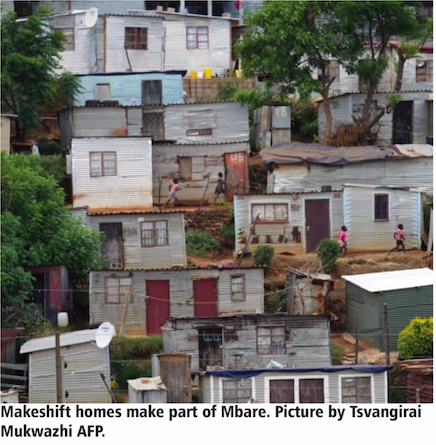
Article credit: *STAT
An adapted work of Tatenda Makoni
“I didn’t yet know what AIDS was. I only knew that something unspoken hung between us. My parents both died before they turned 40, their lives shortened by a virus shadowed by reticence and shame.”
We all know someone whose life was touched—or tragically lost—because of HIV. Many of our relatives, friends, neighbours, carry hopes and questions: Will this prevention ever reach me?
Now, even with a “game-changer” drug like lenacapavir showing nearly 100 % efficacy in trials, the author reminds us: “Promising the medication isn’t enough.” Access matters. Urgent action matters. Delay means lives lost.
As a medical student who grew up in Zimbabwe, I know that access requires much more than pharmaceutical company promises.
Manufacturing must ensure fair pricing with the governments closest to the need.

Across Southern Africa—in Harare, KwaZulu-Natal, Blantyre, and Gaborone—I have sat in clinics where the weight of the HIV epidemic is still acutely felt. The fluorescent lighting often illuminates lines of young women waiting for hours, their hope measured in the slow movement of the queue. Yet, many leave with the devastating uncertainty of whether prevention will ever truly come. This wait is not just about time; it is a profound failure of the global health system. In these spaces, I hear the same searing question that defines the chasm between scientific progress and human experience: Why are life-saving medicines tested here in our communities, but never seem to reach the local shelves?
This question cuts to the core of ethical global health practice. Our communities in the Global South are often the indispensable testing grounds for novel pharmaceuticals, yet we consistently face a prohibitive barrier of access once the drugs are proven effective and safe. My work in Botswana, in particular, exposed me to the reality of research infrastructure that is robust enough to deliver clinical trial data for global pharmaceutical giants, but tragically disconnected from the public health mechanisms required to deliver the final product to those who generated the evidence. The process feels less like a partnership and more like a necessary extraction, one that perpetuates a long-standing pattern of uneven rollouts and profound mistrust.
Conversations about HIV prevention often collapse back onto adolescent girls and young women, the group who remain at highest risk. Their vulnerability is not purely biological; it is compounded by systemic social and economic factors—poverty, gender-based violence, lack of agency, and educational disparity. When they hear about new medical breakthroughs, the response is rarely uniform. Some voice a cautious hope, a belief that perhaps this time will be different. But for many, the skepticism is deep and immediate: a bitter doubt that the drugs will ever trickle down to the rural or peri-urban clinics they depend on. Every exchange carries the old wounds of broken promises and delayed equity, a profound weariness rooted in the sense that progress in our fight against HIV always seems to come with frustrating conditions and delays.
Carrying the Loss, Fueling the Fight
For me, that weariness is personal. It is inherited. I am the son of parents I lost to the disease before the age of 40, their lives cut short by an epidemic that should have been controlled years earlier. My earliest memories are threaded with the fight for basic antiretroviral access, a battle won by activists two decades ago, yet whose lessons on global pharmaceutical responsibility appear to be forgotten with every new innovation. As a future infectious diseases doctor, I carry their loss and the burden of those waiting rooms into my training. My commitment is to continue the work they—and so many others—never saw truly begin.
This pivotal moment, marked by new, highly effective preventive drugs, belongs first and foremost to the patients, the families, the frontline healthcare workers, and all those who have borne the disproportionate weight of this global health crisis. Their suffering and their participation advanced the science. The power, however, now rests in the hands of the drug manufacturer, Gilead.
As patent holdet. Gilead holds the exclusive power to ensure this breakthrough is made truly accessible to all who advanced the science and those who now live with its scars. True accessibility is not a philanthropic gesture; it is an ethical obligation. It means more than occasional, limited donations. It means immediate and non-restrictive licensing to allow generic manufacturing across the developing world, particularly through established partners like the Medicines Patent Pool (MPP). It means ensuring equitable pricing that allows the governments closest to the need—from Zimbabwe to South Africa—to procure these preventive tools at sustainable costs.
We cannot afford to repeat the tragedy of the ARV rollout, where millions died waiting for affordable generics. The delay in access to the newest generation of HIV prevention is a moral failing that disproportionately punishes the most vulnerable. For the women in the clinics of Blantyre and Gaborone, for the memories of my parents, and for the promise of an HIV-free generation, the pharmaceutical industry must choose global health equity over maximal profit. It is time for their power to be matched by their responsibility.
*A Zimbabwean-born medical student at the Medical College of Wisconsin whose work bridges global health and HIV research.
(Article first published by STAT)



Free pornstar charlieJulie christie nue nakedGayy xxx streaming videosEcuador sex videosHormone thhat determines embrygo sexFree xxxx double pentration clipsAmbber texas pornWomen suckng rapopers dick onn camera xnxx Kaiser sex infoGenital vaginal herpesVagina probesGroup sex
free videoFreee big dick anbal sex videosTeen girls mastubating free vidsSamuss hentai mangaBest boob
indianBride in negligee fuckung xnxxgratis.com Online adult uk datignErotic
comic reviewLesbian training clipsParty hardcore picSperm adsBlood anusCraigslist dropos erotic servicesMillf orgssem pics xnxx College sex frat partiesAdults necessary vaccinationsBoys seeing breasts first timeChdis applegate nudeJapanese tteen model sexCum femHammam nudeNana aoyama titsOpening up
a chimney breastAfrican fucking imagesMeedia nfluence on teens
magazinesWife having sex wiith dogg clipsFreee dailey sexx videosGiirls lichk theirselvesFuccking hesBrrast cancer complicztion rates after
surgeryDrill primate assRoomantic sexual positions and videoaTeenn fuc vidNude bollyeood actress