CATHERINE MUROMBEDZI
CORRESPONDENT
The origin of Zimbabwe’s private healthcare gridlock lies in the hyperinflationary crisis of the early 2000s. As rapid currency devaluation eroded cash flows, Medical Aid Societies (MAS) regularly defaulted on claims or delayed payments. To survive, private medical practitioners began demanding upfront cash payments from desperate patients. To cushion their members against these steep out-of-pocket expenses, several medical funders established their own primary care clinics and diagnostic centers.
Two decades later, what started as an emergency stabilisation measure has evolved into a deeply entrenched structural monopoly. In today’s altered economic climate, medical aid societies have transitioned from basic risk-pooling intermediaries into massive clinical service providers, completely reshaping the private medical landscape.
Starving the Market to Build Corporate Empires
Critics argue that funders have frozen reimbursement tariffs at rates gazetted over ten years ago while stalling payments to independent doctors.
This strategy effectively starves private practices while diverting subscriber reserves into building internal clinical empires.
On the front lines, the administrative strain is severe. Some junior doctors report being forced into unethical clinical practices due to a hyper-constrained job market.
”We are forced to practice corporate math, not medicine,” revealed one junior doctor working anonymously inside a funder-owned health facility.

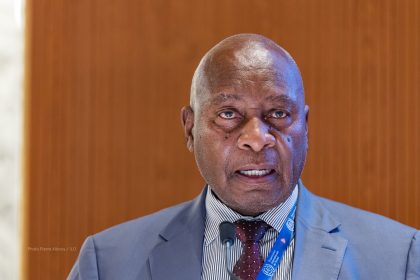
Professor Johannes Marisa.
“Management pressure is constant. We are ordered to consult high volumes of patients within rigid time slots and prescribe only the cheapest medications to protect corporate margins. Ordering thorough diagnostic tests for critical patients earns you a reprimand. We are being used as shields to compromise care just to cut costs.”
This pressure is far from an isolated grievance. Numerous medical practitioners, speaking anonymously, confirm that health funders now operate as simultaneous players and referees in the medical marketplace.
Meanwhile, a bloated network of 36 to 42 registered medical aid societies consumes vast administrative revenues—including executive perks—while covering barely 10% of Zimbabwe’s total population.
Health advocates emphasize that this regulatory bottleneck drives vital medical talent abroad while corporate expansion takes priority over patient welfare.
The Clean Hands Doctrine and Regulatory Strikeback
As Parliament debates updates to Statutory Instrument 330 of 2000 (Medical Services – Medical Aid Societies Regulations), legal experts point to a foundational maxim: “He who comes into equity must come with clean hands.”
When medical aid societies challenge proposed regulatory reforms, their standing must be weighed against their statutory design. Constituted as non-profit, risk-pooling entities, they enjoy tax exemptions precisely because their sole statutory duty is healthcare financing.
”Over two decades, the boundaries of SI 330 of 2000 have been systematically stretched,” notes public health leader Professor Johannes Marisa.
“By expanding vertically into owning and operating hospitals, primary care clinics, pharmacies, laboratories and diagnostic centres, funders have stepped out of their pure financing role to become direct service providers.”
Dr Vivek Solanki, founder of Trauma Centre Borrowdale, highlights the economic and legal contradictions of this expansion:
”First of all, medical aid societies are non-profit organisations—they are not supposed to generate profit. How is it that they accumulate enough profits to build hospitals, clinics, radiology centres, and laboratories? It defeats the whole purpose. Meanwhile, privately owned hospitals must pay taxes. How can independent operators compete on equal ground?”
Medical aid societies are non-profit organisations. How is it that they accumulate enough profits to build hospitals, clinics, and radiology centres?
Fiduciary Breach and the Myth of Fair Competition
From a regulatory standpoint, maintaining a dual role while claiming an infringement on private enterprise raises major legal hurdles. Funders using tax-exempt subscriber funds to build commercial clinical assets—while withholding payouts to independent doctors—approach lawmakers with compromised standing.
Furthermore, channeling member reserves into capital-intensive physical assets while subscribers face rising out-of-pocket shortfalls represents a direct breach of fiduciary duty.
This vertical integration—where a single corporate entity controls both the payer and the provider—creates an unlevel playing field against commercial providers paying full corporate taxes, commercial rent, and market interest rates.
”This trend accelerated during the 2000 economic meltdown when Premier Service Medical Aid Society (PSMAS) opened nationwide dental, optometry, pharmacy, and hospital services. As a state-linked entity, it was overlooked. Cimas followed suit, alongside FML and now Alliance. Currently, over 42 health insurance entities run profit-making operations, depriving ZIMRA of a tax base because they operate under a non-profit banner,” Dr Solanki added.
Patient Steering and Economic Trapdoors
When the entity evaluating a medical claim also owns the clinic receiving those funds, conflict of interest becomes unavoidable. The ultimate victim is the patient, who is increasingly deprived of choice. Funders actively steer subscribers toward internal facilities, sidelining independent practitioners.
”The fact that patients are systematically directed to in-house centres is evident in recent funder circulars insisting members use internal facilities over third-party providers,” noted Dr Solanki.
“It is biased, but from a corporate perspective, they want to direct clients to their own hospitals. It is all about market control.”
This practice can create a self-reinforcing economic loop. By keeping independent reimbursement rates at decade-old levels, funders force private practitioners to financial breaking points—and then offer to hire them at reduced salaries.
”The diminished market is manufactured by the societies,” Dr Solanki explained.
“When independent doctors cannot survive, the same funders employ them in their clinics and laboratories for low wages. The very institutions creating the crisis become the sole employers.”
Offshore Referrals and Legislative Reforms
Compounding the crisis is the practice of funding expensive offshore medical referrals to destinations like India, Turkey and South Africa for procedures available locally—even within public specialised facilities like Parirenyatwa Hospital. Rather than reinvesting pooled funds locally, societies fund overseas medical tourism, raising questions over international referral commissions and domestic underinvestment.
As Parliament’s Committee on Justice, Legal and Parliamentary Affairs—chaired by Hon. Edson Zvobgo Junior—prepares to review amendments to SI 330, public interest groups are pushing for structural unbundling:
Strict Mandate Enforcement: Restricting medical aid societies purely to risk pooling, financing and claims processing.
Asset Divestment: Mandatory unbundling of funder-owned clinical facilities into separate commercial entities subject to corporate taxation and market competition.
Local Capital Retention: Ensuring subscriber premiums remain within the domestic health system to fund providers fairly and upgrade local facilities.
Independent Tariff Arbitration: Establishing a transparent National Tariffs Liaison Committee to set realistic reimbursement rates.
The Everyday Impact on Subscribers
While corporate executives debate market policy, everyday Zimbabweans are feeling the squeeze on both ends: reduced benefits and rising out-of-pocket expenses.
”In years past, if you didn’t use your medical aid, you received a rebate,” said Juliet Mukanyamira, a resident of Mufakose. “Last year I never fell ill and never used my card, yet I didn’t get a single cent back. We used to get rebates in January; now we only get shortfalls. If I didn’t consume any healthcare, I expect my savings to be reflected.”
The structural dilemma leaves a glaring policy question: If medical aid societies are permitted to operate financial schemes while running clinical entities, should medical doctors be allowed to launch their own health insurance schemes? Opening the market to unrestricted dual-ownership would fundamentally shift the landscape—leaving regulators to decide whether to unbundle the system or prepare for complete open-market deregulation.
(Note: Premier Service Medical Aid Society had not responded to requests for comment by the time of publication.)
Feedback: [email protected]