CATHERINE MUROMBEDZI
CORRESPONDENT
A historic court challenge is forcing a legal shift toward recognition, bodily autonomy and inclusion for the intersex community.
The legal challenge to the High Court was an application by seven intersex persons, including two minors seeking recognition. This marked the first time intersex persons have taken the government to court.
The core demands were the call for a third sex marker on legal documents and an immediate ban on non-consensual surgeries on minors.
The government response was not a counter challenge, but rather, reasearch into scientific evidence.
This resulted in a high level meeting between the Minister of Justice, Legal and Parliamentary Affairs, Hon Ziyambi Ziyambi, the Social Welfare Minister, Hon Edgar Moyo and Minister of Health and Child Care, Dr Douglas Mombeshora.
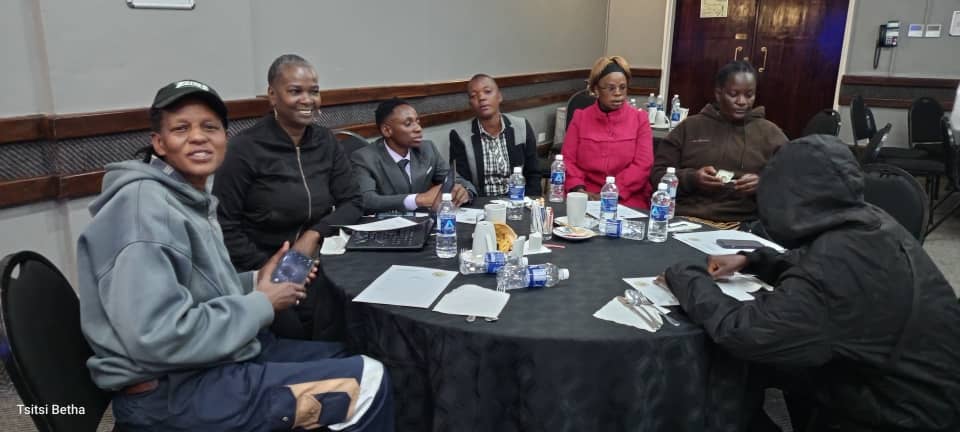
Stakeholders at the inaugural Intersex persons engagement in Harare.
The high-level research talks with the intersex community, civil society and the media followed the legal pressure.
Although the health sector offered unrestricted services to everyone, there were hurdles as Zimbabwe’s Constitution recognises only two sexes.
One is either male or female. Two sizes fit all. In between lies an invisible community, the intersex.
Intersex is often misinterpreted in society.
Intersex refers to a range of natural biological traits such as chromosomes, gonads, hormones, or reproductive anatomy that may not fit typical definitions of male or female.
It is not a choice or a disease and it is not caused by wrongdoing; rather, it is a form of human biological variation.
The engagement was a result of a court challenge, the legal team listened to the reason of scientific evidence.
Minister Ziyambi was honest.
“We received a court challenge regarding this issue (intersex) and we referred it to the Attorney General. After that we decided as a Ministry that we need to undertake research.”
That challenge was historic as intersex persons are demanding legal recognition and protection from decades of systemic exclusion.
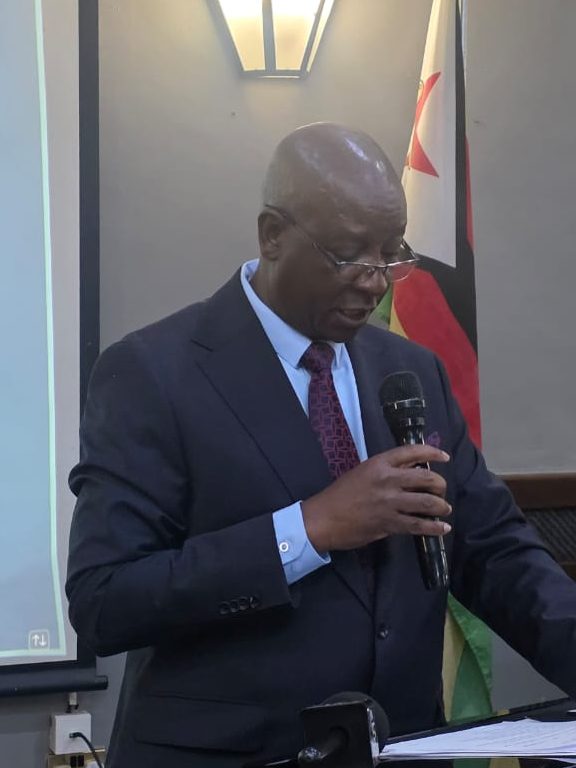
Minister of Justice, Legal and Parliamentary Affairs, Hon Ziyambi Ziyambi acknowledges the gaps in recognising Intersex people.
The High Court application sought a declaratory order compelling the state to recognise intersex people as a distinct category under Zimbabwean law. The demand including a third sex marker on birth certificates, IDs and passports, procedures to amend sex markers. It also demands a ban on non-consensual, non-essential surgeries on intersex minors. Intersex persons have a right to decide and no one else should do that on their behalf.
The government launched its legal reform process in mid-2025 as a crucial step towards identifying legal and policy gaps.
Among the seven applicants were two minors denied education and social services because their documents did not reflect their identities. Education is a right enshrined in the Constitution.
The Ministry of Justice got support from the UN Development Programme to carry out the research.
Article 52 guarantees every person the right to bodily and psychological integrity, including the right not to be subjected to medical procedures or the extraction of bodily tissue without informed consent. This is relevant to the fight against surgeries performed on intersex infants who have shown that the medical procedures were wrong as they later developed correct sexual identity.
The Ministry of Justice has accepted the UN Human Rights Council Universal Periodic Review recommendations to protect intersex people from non-consensual medical procedures and other human rights violations.
Participants reviewed barriers faced by intersex persons in Zimbabwe’s documentation and public services systems, including: legal documentation systems that recognise only binary sex markers. Intersex persons face difficulties in obtaining birth certificates and national IDs, due to mismatches between biological variation in the documentation categories.
They also face exclusion from education enrollment, reaching to health services, banking, employment and voting among many other challenges.
The Ministry of Justice said it will validate the findings, draft legal and policy recommendations for Cabinet consideration, maintain ongoing engagement with intersex persons and civil society organisations (CSOs) and provide feedback to participants on the progress made.
“The process will rely on both expert guidance and the lived experiences of intersex persons, emphasising that inclusion must be practical, humane and grounded in real life,” said Hon Ziyambi.
Of concern were the shared lived realities which had participants in near tears. Kuda Murisa, Director of the Intersex Community of Zimbabwe (ICoZ) said the reforms align with the African Commission’s Resolution 552 and the country’s vision to “leave no one behind” under its National Development Strategy.
“We are pleased to have come this far. The country’s vision of leaving no one behind cannot be realised when others are left behind,” said Murisa.
Tsitsi Ndabambi, director of Intersex Community Zimbabwe Trust, (ICZT) said the journey has been long, but worthwhile.
“We held a fruitful engagement, it was a powerful and important moment for Zimbabwe’s intersex community. For the first time, our concerns were being discussed publicly directly at such a high level, with ministers, senior Government officials, medical professionals and other key stakeholders in the room. As the Director of Intersex Community Zimbabwe Trust, I left the meeting feeling encouraged, but also deeply aware of the responsibility that comes with such a moment. For years, intersex persons and their families have lived with stigma, discrimination, uncertainty around identity and documentation. Intersex persons have encountered barriers to healthcare, education and decisions about their bodies being operated on without their informed consent. The presence of Government leaders and their willingness to listen to lived experiences gives us hope that we are moving towards a Zimbabwe where intersex people are not treated as an afterthought, but are citizens whose rights, dignity and well-being matter too,” said Ndabambi.
She urged the government to speed up the process into reality.
“Our recommendations are therefore, not simply a wish list; they are a call for Government to translate the dialogue into meaningful and measurable action. We need free and accessible healthcare for intersex persons. We need protection for children from unnecessary and non-consensual medical interventions, equal access to education, employment, public services, political participation and sport. We require stronger legal protection against discrimination, appropriate legal recognition, safe and dignified access to public facilities and places of detention. We also need sustained public education because ignorance continues to fuel stigma and discrimination. As Intersex Community Zimbabwe Trust, we are ready to work alongside Government, medical professionals and other stakeholders to take this conversation forward. At the stakeholders engagement, we were heard, now we want to see that listening translated into action. Intersex people are not asking for special treatment, we are asking for equal rights, dignity, protection and the opportunity to live our lives without discrimination. As the president mentioned that no person should be left behind,” called Ndabambi.
Three Intersex organisations, ICZT led by Tsitsi Ndabambi, ICoZ led by Kuda Murisa, Malume Ngwenya, from Bulawayo’s Intersex Advocate Trust Zimbabwe sat on the panel discussion.
Speaking on the sidelines of the meeting, Devon said she had met numerous barriers when travelling.
“The registrar general’s (RGs) office now understands and affords one a correct image look. The look that comes out on your image, one can now get a new-look identity,” Devon praised the RG’s department.
“However, we still meet challenges when travelling because some of the women are not allowed to travel or check in wearing female clothes because of the gender maker which says he is a male, so immigration prefers to see you going through putting on male clothes. They will harass you and ask you to dress as stated by your gender marker. One is taken aside into an immigration office at the airport and the questioning can be total harassment,” said Devon.
The crucial discussion came after a series of closed door dialogues and now the Intersex Community celebrates publicly for this milestone.
Rights groups welcomed the review but expressed anticipated resistance from ‘conservatives’.
The strategic roadmap from the discussion to the law books requires urgency.
Feedback: [email protected]