Tinashe Tirivavi
Two Nations
Beitbridge – Producer communities from at least five Beitbridge wards have received US$74 779,68 share benefits for the hunting year 2025 from Communal Areas Management Programme for Indigenous Resources (Campfire), according to a report in the hands of Two Nations.
The share benefits go a long way in supporting development projects including building clinics, schools, boreholes and other infrastructure needed by the communities.
The proceeds are from trophy hunting with the elephant attracting the highest hunting fee at US$10 000, leopard US$2 000, buffalo US$1 500, hyena US$200, monkey US$10, pigeon and doves US$4 each.
Beitbridge Rural District Council CEO, Officer Kaliboni Mbedzi however complained that the hunting seasons were being affected by mining in the district as the noise and dust affect animals and move them away from their protected areas.
“Another challenge we face are poachers, especially border jumpers who are illegally killing the animals,” she added.
Campfire is a project for management of resources by communities. The communities benefit from that management hence reducing human-animal conflict.
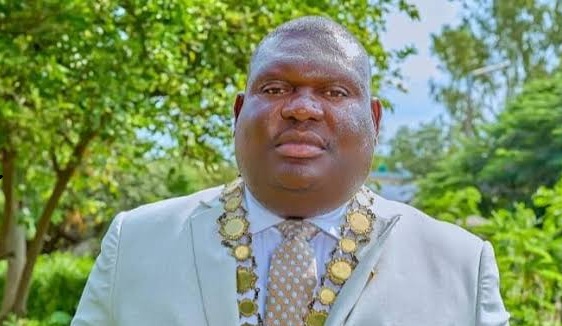
Council Chairman and National Secretary for CAMPFIRE Association of Zimbabwe, Oscar Chiromo, said CAMPFIRE was started by Government in 1989.
The report shows that a total of US$74,779.68 and ZiG844168,62 was administered to beneficiary communities in the district.
Revenue is shared with 60% going to communities, 36% to council programme operations and 4% to CAMPFIRE Association.
Tshivhombwe received the largest allocation to a single ward of US$14442,96, which is ZiG160 622,72, while the Pingwe Project covering wards 7, 8 and 9 received US$15 840,72, which is ZiG181 325,70.
Other paid beneficiaries include Ward 10 with US$3 360, Maramani Ward 8 with US$4 032, Ward 7 with US$1 008 and Ward 6 with US$480. Dite received US$7 392, which is ZiG83 880 while Chikwalakwala received US$7 056 which is ZiG80 136.
However, payments for some wards are still outstanding because they have not yet opened CAMPFIRE community accounts. These include Chitulipasi with US$7 056, Dumba with US$3 528 and Chapongwe with US$3 528.
Ward chairpersons have been advised of the status, with calls for urgent attention so that community monies still withheld by the operator can be disbursed.
The benefits have funded a number of community projects across the district. In Ward 1, the money has gone towards the reticulation of Chikwalakwala irrigation water points, building materials for Chipise Clinic and water reticulation at Chabili Primary School.
In Ward 2, the projects include Dite-Lukange Secondary School, the Dumba Staff House, armoured cable for Chapongwe School and the Dite Community Hall.
One teacher who preferred anonymity hailed Campfire proceeds for enabling their schools to build decent accommodation for them.
In Ward 7, proceeds were used to build Mtetengwe Waiting Mothers’ Shelter and Ndambe Clinic, in Ward 9 re-roofing of a classroom at Swekeri and the ceiling at Masera Clinic were done.
In Ward 10, the funds have supported Whunga Clinic, while Wards 7, 8 and 9 have also received direct cash benefits.
“Campfire funds can build communities, we have proof in schools, clinics, boreholes and roads. But for it to truly build communities, disbursement must be fast, transparent, and community-led. The community must decide the priority projects and conservation will succeed,” said Chiromo.
.