CATHERINE MUROMBEDZI
CORRESPONDENT
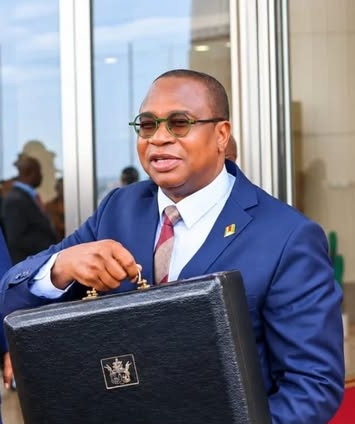
THE road to fulfilling the Abuja Declaration of allocating 15% of the national budget to health remains a far cry for Zimbabwe, after Finance Minister Professor Mthuli Ncube presented a 2027 National Budget at the New Parliament Building in Mt Hampden. He allocated ZiG35.462 billion to the Ministry of Health and Child Care, (MoHCC) roughly 9.9% of the main expenditure ceiling.
Under the 2001 Abuja Declaration, African Union governments pledged to allocate at least 15% of their national budgets to health. Based on Treasury’s expenditure ceiling, hitting that target in 2027 requires roughly ZiG53.7 billion.
Addressing Parliament on Thursday, November 19, 2026, under the theme “Accelerating Economic Transformation and Building Resilience to Climate and Global Shocks”, Ncube set the main expenditure ceiling at ZiG358.303 billion against projected government revenue of ZiG349.5 billion.
Although health received the second-largest ministerial vote after Primary and Secondary Education (ZiG47.7 billion), the allocation leaves the sector about 5.1 percentage points short of the 2001 African Union benchmark.
Reaching the 15% mark on that expenditure ceiling would require approximately ZiG53.7 billion, creating a shortfall of around ZiG18.3 billion against the Abuja standard, coming well below the ZiG974 billion in combined bids submitted across ministries and agencies.
What do the numbers mean on the ground?
Ncube stated that the 2027 health vote is meant to consolidate and sustain interventions across the sector, covering employment costs, consumables, equipment and the rehabilitation and construction of health infrastructure. However, health observers and analysts note that headline budget figures tell only part of the story. The bulk of the allocation goes to salaries vs. health care delivery, because the allocation must absorb employment costs alongside operational needs, the pool left strictly for medicines, diagnostics and facility upgrades is tighter than the headline figure suggests.
Disbursement timing and absorption is crucial. Treasury reported that ministries, departments and agencies had spent an average of 74.5% of their approved budgets by October 30, 2026.
Advocates have repeatedly stressed that late or unpredictable disbursements can stall clinic operations even when funds are voted on paper.
ZiG35.5 billion allocated vs. ZiG53.7 billion required. At 9.9% of the national budget, Zimbabwe’s 2027 health vote still trails the 15% African Union Abuja Declaration target by ZiG18.2 billion.
Jacob Ngwenya of Zimbabwe Initiative for Health Action (ZIHA) welcomed the budget but called on the need to get to 15%.
”The 2027 health allocation recognises the sector’s importance, yet the figures show Zimbabwe still falls short of the Abuja Declaration commitment,” said Jacob Ngwenya, founder of ZIHA.
”For rural and underserved communities, the real issue is not how much money appears on paper. What matters is how much actually reaches clinics, how predictable disbursements are, and whether those funds keep essential services running. An approved budget that arrives late cannot fix medicine shortages, staffing gaps, equipment needs, or rising patient demand.
”As Zimbabwe mobilises domestic health resources, budget priorities must reflect the voices of vulnerable groups. We cannot achieve universal health coverage while rural residents and people with disabilities still face barriers to inclusive care. The Abuja Declaration 15 percent target must be more than a historical promise. It must be a measurable national financing goal backed by transparent allocations, timely releases, and strict accountability for every dollar spent,” said Ngwenya.
Zimbabwe’s health sector has long leaned on development partners to help sustain major programmes such as HIV, tuberculosis and malaria responses, while domestic financing remains vital for public hospitals, staffing and core services.
Health and Child Care Minister Dr Douglas Mombeshora is on record emphasizing the need for predictable domestic resource mobilisation and strengthening as external support shifts.
Implications for Masvingo and rural communities remains the same.
For families, clinics and hospitals across Masvingo Province, from provincial referral care to rural health centres in districts such as Chivi, Mwenezi, Bikita, Zaka, Chiredzi and Gutu, the gap between Abuja ambitions and actual funding carries practical stakes.
When budgets are stretched or releases are uneven, patients feel the pressure through medicine stock-outs, strained referral and ambulance systems, aging equipment and staffing bottlenecks.
More than two decades after the pledge was made, the 15% threshold has never been reached, reducing the Abuja Declaration to little more than a matter of appending a signature and parking the document with no action.
Feedback: [email protected]