In the heart of Gandanzara, Manicaland Province, the red dust of the earth tells stories of seasons past. Gogo Clara Mugodo’s homestead stands as more than just a residence.
It is a beacon of hope, a testament to the resilience of the rural spirit, and a living case study of what is possible when basic amenities reach the grassroots.
UNICEF and ZIMSTAT took a cohort of 10 journalists on a field tour to Inyanga in December 2025.
ZIMSTAT plays a key role in monitoring water sources, sanitation, and hygiene (WASH) services, primarily through household surveys, environmental statistics reports, and mapping access to safe water.
“As ZIMSTAT we collect, coordinate and supervise national statistics. We develop standards, analyse and disseminate data. This ensures informed decision-making, driving growth and development. Zimstat’s work impacts various sectors, from healthcare to agriculture, shaping Zimbabwe’s future,” said Mr Aluwisio Mukavhi Director Demography & Social Statistics.
The media tour was on understanding the aspects of evidence gathering in Inyanga district.
While much of the Gandanzara surrounding landscape grapples with the harsh realities of underdevelopment, aged 78, Gogo Clara’s home offers a glimpse into a dignified rural life, powered by the sun and anchored by clean sanitation. Yet, beneath the surface of this “oasis” lies a complex narrative of isolation, the digital divide, and the urgent need for data-driven intervention.
EMPTY NEST
Gogo Clara is a woman of quiet strength. Her home, though meticulously kept, echoes with the silence of a nest that has long since seen its fledglings fly away.
“I am now alone; my children are married and living in the cities,” she said her voice a mix of maternal pride and the melancholy of distance.
Her children have become part of the urban migration story that defines much of Zimbabwe’s demographic shift: one is in the lakeside town of Kariba, another in the ancient city of Masvingo, and her son resides in the farming hub of Marondera.
While she is physically alone, she is far from idle. Her days are rhythmic, filled with the chores of a self-reliant woman. However, the silence of the house is occasionally heavy.
“I used to have a radio. It broke down,” she lamented. “My grandson left me this gadget, but it only plays recorded music. It lacks the pulse of the world, there is no news.”
For Gogo Clara, the loss of her radio was the loss of her window into the nation. She misses the news, the weather updates, and the familiar voices that once kept her abreast of the country’s progress.
To bridge this gap, she clings to her mobile phone, a lifeline draped around her neck in a pouch.
“I do not want to miss any call, so I have my phone in this neckbag,” she explained. In the rural expanse, a missed call is a missed connection to the family that sustains her spirit.
SOLAR SPARK
Gogo Clara is considered one of the “lucky ones.” Her home is illuminated by solar-powered lights, a luxury in a region where the national grid is often a distant dream. She also boasts of a clean Blair toilet, a gold standard for rural sanitation that significantly reduces the risk of waterborne diseases. However, even within this oasis, the scarcity of resources is evident. The solar system is basic; it lights rooms, the outside, and charge the phone.
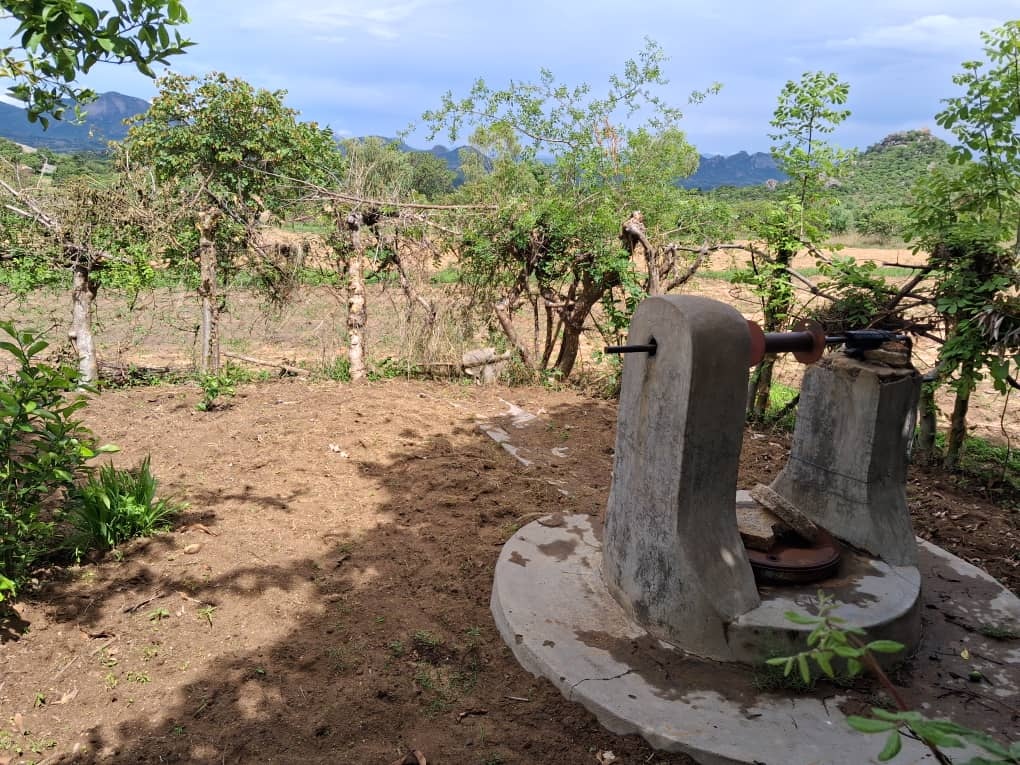
The most pressing challenge, however, is the liquid gold: water. Gogo Clara’s homestead once had a functional well, but the changing climate has been unkind. The well has long since dried up, a victim of receding water tables and erratic rainfall patterns.
This personal loss mirrors a national crisis.
According to data provided by UNICEF in 2023, approximately 3.5 million people in Zimbabwe still lack access to safe drinking water.
For Gogo Clara, “clean water” is a grueling daily mission. Her primary source is a community borehole located a kilometre away.
While the water is safe, the physical toll of fetching it at her age is a silent burden.
Gogo Clara is lucky, her children afford her a house helper.
“I have a helper who lives a few houses away. She comes everyday to fetch clean water from the borehole. She also helps with major laundry of blankets and curtains. I am still able to wash my own clothes and bath,” said Gogo Clara.
ZIMSTAT, reports that a staggering 70% of rural households rely on boreholes as their primary source of drinking water. While the borehole represents progress, the distance represents a gap in infrastructure that data-driven planning must bridge.
The challenges of rural life extend beyond the boundaries of the homestead. Healthcare, the very foundation of human security, remains a distant luxury.
“The nearest clinic is 8km away, and it’s not well-equipped,” said Gogo.
“They don’t even have a BP machine at the clinic. We need better healthcare services here.”
For an elderly woman, an 8-kilometre journey is a marathon, and the prospect of arriving at a facility that lacks basic diagnostic tools like a blood pressure monitor is a frightening reality.
Compounding this isolation is a crumbling road network that acts as a barrier to commerce and family.
“The roads are terrible; no buses come here. My children visit when they can, but it’s difficult for them to travel,” she explained.
The lack of reliable transport doesn’t just isolate individuals; it stifles the local economy. When roads are impassable, the cost of goods rises, and the ability to move produce to market vanishes.
Furthermore, a new shadow has fallen over the community: the fear of “cattle hustlers.”
Theft has become a rampant concern, threatening the few assets these families possess.
“Hustlers are stealing our cattle, and nothing is being done. I had five chickens stolen recently,” she said. In a display of modern thinking, Gogo Clara suggests a technological solution to an age-old problem.
“The government should send those small planes which fly without a pilot (drones) to monitor and catch these thieves,” she asserted.
It is a poignant request—a woman in a remote village calling for high-tech surveillance to protect her humble livelihood.
POWER OF EVIDENCE
Gogo Clara’s story is not just a human-interest piece; it is a data point in the larger narrative of Zimbabwe’s development. The importance of data in the modern economy cannot be overstated.
Statistics are the eyes through which a government sees its people. Evidence-based planning is the only way to ensure that resources are not just spent, but invested where they will yield the highest return.
For instance, the economic argument for improving water and sanitation is undeniable.
UNICEF’s 2023 data highlights a powerful multiplier effect: every single dollar invested in Water, Sanitation, and Hygiene (WASH) generates an economic return of up to US$9.
This return manifests in reduced healthcare costs, increased productivity, and the dignity of the citizenry. When we look at Gogo Clara’s house helper walking a kilometer for water, we are looking at a loss of potential economic hours. She can only carry one 20l bucket at a time.
Data informs policy, and policy drives investment. By understanding that 70% of rural homes depend on boreholes, the government can prioritise the maintenance of these assets and the drilling of new ones closer to the people. Without Zimstat’s tireless efforts to collect data in even the most hard-to-reach areas, voices like Gogo Clara’s would remain unheard, and their needs would remain uncounted.
RESILIENCE
Gogo uses firewood for cooking. The house helper and herdman cut down trees to provide her with wood.
Forests are getting depleted and smart renewable energy would see destroyed forests replenishing as stumps shoot again.
Despite the hardships, Gogo Clara remains a pillar of her community. She is a woman of faith and action, doing her own laundry and attending church every Sunday without fail.
“I only miss Church when I am not feeling well,” she said with a smile. Her joy is infectious, especially when she the media visited her lonely home.
When meeting the press, her excitement at recognising names like Elsie Mojapelo of Radio Zimbabwe was palpable.
“I know Elsie wekwaMojapelo, it’s you, oh come and hug me!” she exclaimed, beaming with joy.
This moment underscores the vital role of information. For Gogo Clara, the radio was not just entertainment; it was companionship. Her story is a testament to the resilience of rural Zimbabweans who, despite being underserved, continue to contribute to the social fabric of the nation.
A Vision for 2030 states the mantra: Leaving No One Behind.
As Zimbabwe marches towards its goal of becoming an upper-middle-income economy by 2030, the “Gogo Claras” of the country must be at the centre of the strategy.
To achieve this vision, the nation must prioritise a shift towards evidence-driven decision-making.
By leveraging the granular data provided by Zimstat, the government can identify specific geographic areas of need, track the progress of developmental projects, and make informed adjustments in real-time.
A middle-income economy is not just defined by GDP figures in Harare or Bulawayo. It is defined by the distance a grandmother in Gandanzara has to walk to the clinic. It is defined by the availability of tools and medication in local clinics and the safety of their livestock.
By harnessing the power of data, Zimbabwe can unlock its full potential, ensuring that growth is inclusive and sustainable.
Zimstat’s commitment to “not plucking information from the skies” but going deep into the hard to reach communities is what will ultimately propel the nation forward.
Ground-level data is the fuel for the engine of development.
It ensures that when the government plans for the future, it is planning for a future that includes Gogo Clara’s oasis—making it not just a rare beacon of hope, but the standard for every household in the rural communities. With a strong foundation in data-driven strategy and a heart for its people, Zimbabwe can indeed chart a course towards a brighter future.
Gogo Clara’s plea for drones and her frustration with local healthcare represent a sophisticated understanding of the tools needed to bridge Zimbabwe’s rural-urban divide.
As the nation eyes 2030, integrating high-tech security and revitalising health infrastructure are essential for rural dignity.
Drones become a modern shield.
For Gogo Clara, livestock are “bank accounts on hooves.” When “hustlers” steal, they rob a savings account. Drone technology offers a transformative solution to the “tyranny of distance”:
Rapid surveillance from a single drone can patrol thousands of hectares in minutes, a task impossible on foot.
The 8km trek to a clinic is a physical hurdle, but the lack of a Blood Pressure (BP) machine is a systemic failure. For the elderly, unmonitored hypertension is a “silent killer.”
By combining Gogo Clara’s resilience with data-driven technology, Zimbabwe can turn these gaps into opportunities, thereby ensuring no one, no community is left behind.
Feedback: [email protected]