DUMISANI CHAUKE
CHIPINGE TIMES REPORTER
CHIPINGE – For years, women and girls in remote Hakwata Village in Ward 25, Chipinge under Chief Musikavanhu, near the Mozambique border spent hours walking long distances to fetch water and firewood.
The community which is about 16km from the nearest national electricity grid connection and vulnerable to droughts and unreliable rainfall, now has access to water and electricity, while 90 households use biogas for cooking.
This is thanks to the Climate Adaptation Water and Energy Programme (CAWEP) started in 2024 with the main objectives being to improve access to reliable water and clean energy, strengthen communities’ ability to cope with climate shocks and support livelihoods and economic activities.
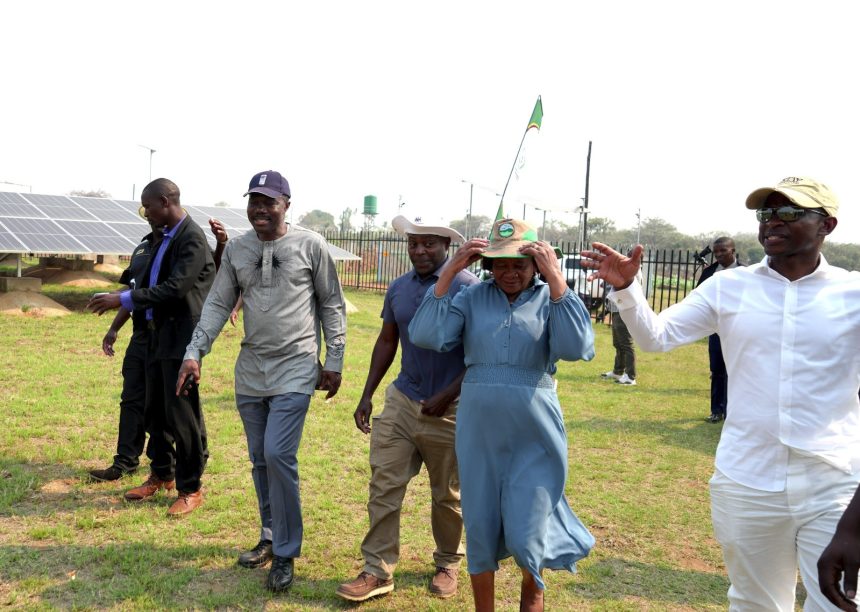
Last week a UNDP field visit was made to Hakwata at the winding up of the programme. Partners in the programme were the Government of Zimbabwe through the Ministry of Environment, Climate and Wildlife, with funding from the British Embassy.
Five solarized boreholes now serve nine water points, while a 200kW solar mini-grid supplies power to Hakwata Clinic, Hakwata Secondary School, 18 businesses and qualifying households within a one-kilometre radius.
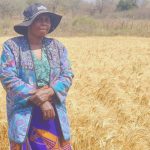
Beneficiary representative Ndaizivei Makuyana said the new facilities had eased the burden on villagers, particularly women and girls.
“Before these interventions, we used to walk long distances to get water and fetch firewood. Now we have tap water, biogas and electricity. The solar mini-grid is the mother of all the interventions because it has changed so many things in this community, while girls now have more time to concentrate on their studies,” said Makuyana.
The new facilities have also helped villagers take up income-generating activities, including a 113-member garden project mainly run by women and young people.
The garden produces vegetables throughout the year for sale in Checheche and across the border in Mozambique.
Representing Mutema-Musikavanhu MP Angeline Gata, Ward 25 Councillor Pioneer Gavhumende said the interventions had helped women and young people venture into business.
“Our savings groups have evolved into commercial entities, while four women and one youth have qualified for electric tricycles to transport produce, goods and passengers,” said Gavhumende.
The changes in Hakwata are part of CAWEP, a £14.1 million four-year programme implemented by UNDP Zimbabwe in partnership with the Ministry of Environment, Climate and Wildlife and funded by the UK Government through the Foreign, Commonwealth and Development Office. The programme was implemented in Chipinge, Chivi, Insiza and Binga.
UNDP Zimbabwe Resident Representative Dr Ayodele Odusola said the experience in Hakwata demonstrated the need to tackle climate challenges through a combination of basic services, livelihoods and community participation.
“Climate adaptation works best when we address water, energy, livelihoods, finance and institutions together. Infrastructure without finance is unsustainable. Technology without community ownership cannot endure,” said Odusola.