As the global community grapples with an accelerating climate crisis, the intersection of engineering and environmental science has birthed a new generation of “smart” energy solutions.
While the first wave of the green revolution focused on vast wind and solar farms, a new paradigm is emerging—one that prioritises high energy density and ecosystem preservation.
In Sub-Saharan Africa, solar mini-grids have already begun transforming marginalised rural landscapes, empowering small-scale farmers to transition toward climate-resilient agriculture. These systems provide localised power where the national grid cannot reach.
Where is this happening?
Zimbabwe (Mashonaland Central): In areas like Hakwata, solar mini-grids are powering irrigation schemes, allowing farmers to grow crops year-round regardless of rainfall patterns.
Kenya (Turkana County): Remote fishing communities on the shores of Lake Turkana use mini-grids to power cold storage, drastically reducing post-harvest losses.
Nigeria (Muregi Community): A solar hybrid mini-grid has replaced expensive, polluting petrol generators for small businesses and healthcare centers.
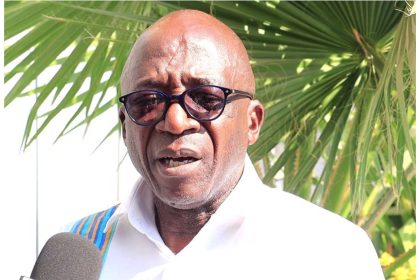
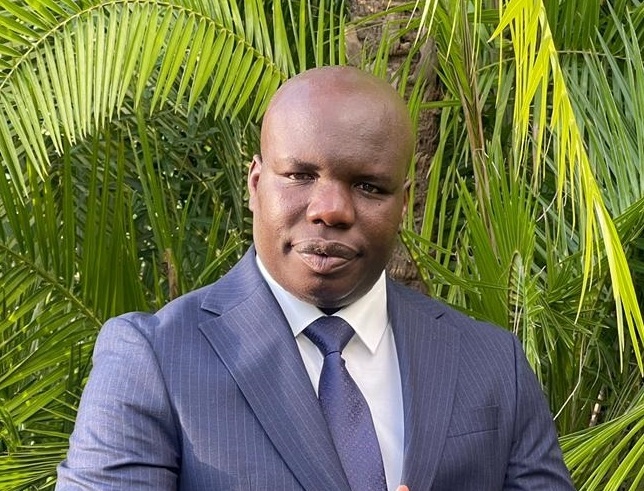
Engineer Dr Edzai Kachirekwa, the CEO speaks on the hidden cost of “Green” land
despite these successes.
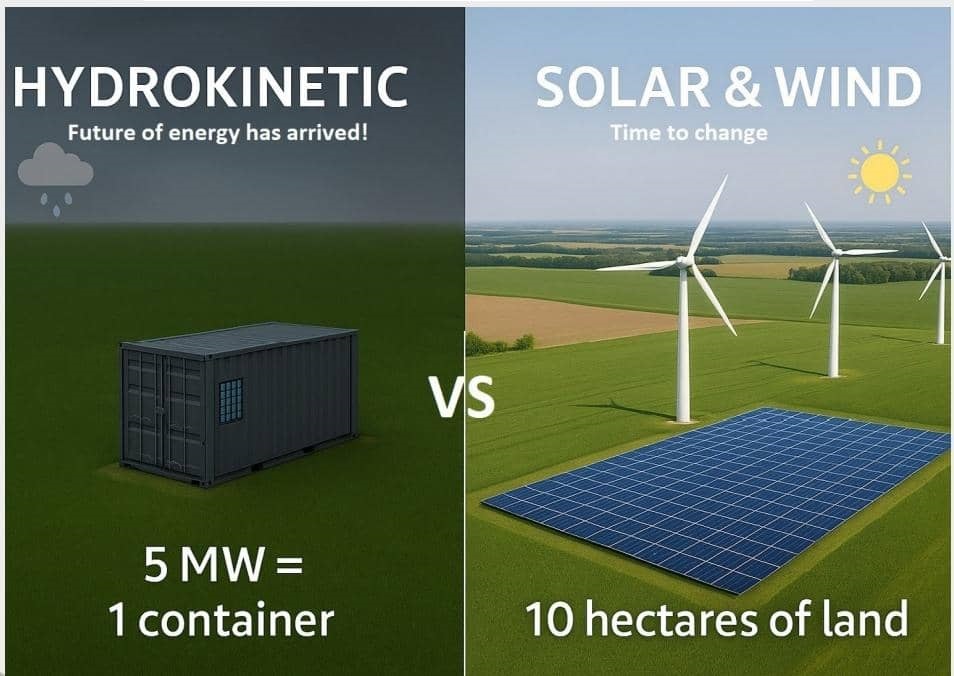
“Environmentalists are also increasingly flagging the ecological footprint of massive solar farms. To generate 250MW of solar power, between 600 and 900 hectares of land must be cleared.
”The stakes are deeply human,” says Eng Dr Edzai Kachirekwa. “A tree destroyed can be equated to 20 human lives lost. When we quantify the value of our ecosystem, the mission becomes clear: we must achieve net-zero emissions through technologies that protect, rather than displace, our natural habitats.”
“The answer to land degradation lies in Hydro-Kinetic and Magnetic Generation. Unlike traditional hydroelectric power, which requires massive dams like Lake Kariba and the flooding of vast basins, this technology represents a leap forward in decentralized power.
At its core, the Hydro-Kinetic generator leverages Faraday’s Law of Induction:
Where a conductor moving through a magnetic field induces a voltage).
This system acts as a “power magnifier,” taking input from sources like batteries, solar, or wind and magnifying that output by 2, 3, or even 5 times. It retains the principles of force produced by magnetic fields to generate electricity on demand, 24/7,” said Eng Dr Kachirekwa.
He further explains why It changes the game. “The intelligence of this technology lies in its efficiency and footprint. While solar is limited by daylight, averaging a 20% capacity factor, Hydro-Kinetic systems operate with a capacity factor of 60–96%.
Perhaps the most staggering statistic is the density: a 5MW plant can be housed within a single 40ft shipping container. This allows for “on-premise” installation for mines, gated communities, and industrial hubs, completely eliminating the need for expensive transmission infrastructure. “By moving away from land-heavy solutions and toward magnetic and kinetic innovation, the goal of a net-zero Zimbabwe becomes more than a dream—it becomes an engineering reality,” he states.
As Power Giants Africa expands into West and East Africa, the message is clear: we can power the continent without sacrificing the trees that sustain us.
Feedback: [email protected]