SOLOMON IMBAYAGO
In today’s rapidly changing world, education systems are increasingly recognizing that learning is not only about reading, writing, and arithmetic. For young children in Early Childhood Development (ECD), learning is a rich and dynamic process that involves imagination, creativity, movement, and emotional expression. Creative arts such as drawing, painting, music, dance, drama, storytelling, and crafts are therefore becoming central to modern early childhood education.
Education experts argue that when creative arts are integrated into teaching and learning, children develop critical thinking skills, emotional intelligence, and social awareness. These artistic activities provide opportunities for children to explore their environment, communicate their feelings, and develop confidence in expressing their ideas.
Renowned psychologist Howard Gardner transformed how educators think about learning through his Theory of Multiple Intelligences, which suggests that children are intelligent in many different ways. Rather than viewing intelligence as a single ability measured by tests, Gardner proposed that learners possess several forms of intelligence, including musical, bodily, spatial, interpersonal, and linguistic intelligence. Creative arts provide a powerful platform through which these different forms of intelligence can be nurtured in early childhood classrooms.
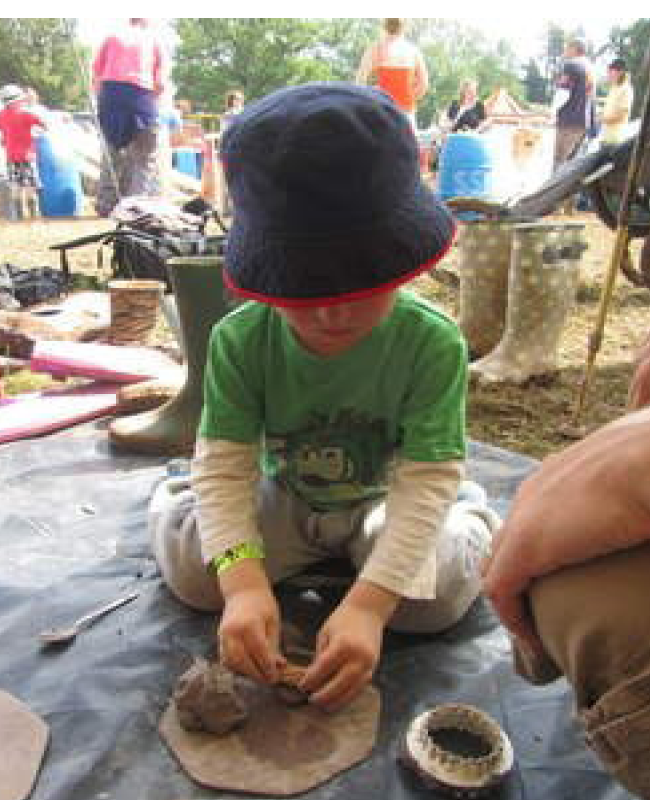
In contemporary educational discourse, creative arts are closely associated with the Theory of Multiple Intelligences developed by Gardner challenged traditional views of intelligence that focused mainly on linguistic and logical abilities measured through standardized tests. Instead, he proposed that intelligence is multifaceted and that individuals possess different forms of intellectual strengths.
According to Gardner, children demonstrate diverse intelligences including linguistic, logical–mathematical, musical, bodily–kinesthetic, spatial, interpersonal, intrapersonal, and naturalistic intelligence. As Gardner explains, “human cognitive competence is better described in terms of a set of abilities, talents, or mental skills which we call intelligences” (Gardner, 2011).
Creative arts therefore provide powerful learning opportunities that support the development of these diverse intelligences. Through artistic expression and exploration, children learn in ways that align with their natural abilities and learning styles.
Learning Beyond Books
Walk into a vibrant ECD classroom and you will often find children singing songs, acting out stories, drawing colourful pictures, or dancing to rhythmic music. To an outsider, these activities which may look like simple play, but education specialists emphasize that they are powerful learning experiences.
Elliot Eisner an Art education scholar argued that the arts help learners develop ways of thinking that traditional academic subjects often overlook. Through artistic activities, children learn to interpret experiences, explore possibilities, and make meaning of the world around them. For example, when a child draws a picture of their family, they are not simply playing with crayons. They are learning to represent ideas visually, express emotions, and communicate personal experiences.
Similarly, music activities help children develop rhythm, memory, and listening skills. Singing songs and clapping rhythms also strengthen language development and concentration.
Creativity Builds Confident Learners
Creative arts play a crucial role in nurturing imagination and innovation. In a world where creativity is increasingly valued, early exposure to artistic expression helps children develop the ability to think differently and solve problems creatively. Art educators suggest that art materials introduce children to important design elements such as colour, pattern, texture, and form. These experiences stimulate curiosity and encourage children to experiment with ideas.
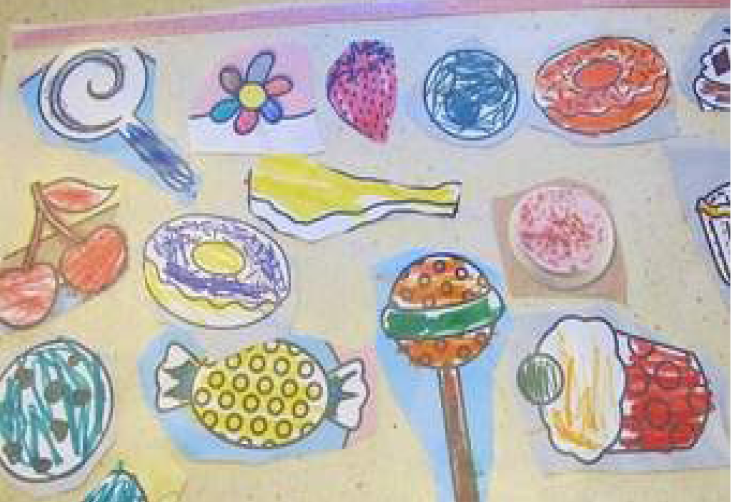
Unlike many academic subjects that require a single correct answer, creative arts allow children to explore multiple possibilities. A drawing can be interpreted in different ways, a dance can express different emotions, and a story can take many imaginative directions. This freedom encourages divergent thinking, a key component of creativity.
Building Social Skills Through the Arts
Creative arts also help children develop strong social and emotional skills. Activities such as group singing, drama performances, and collaborative art projects require children to interact with one another, share ideas, and work together. The sociocultural theory of learning proposed by emphasizes that learning occurs through interaction with others. According to Vygotsky, children develop knowledge and skills through collaboration and cultural experiences.
In ECD classrooms, creative arts provide exactly this kind of interactive learning environment. Children learn empathy, cooperation, and respect for different perspectives as they participate in group artistic activities. For instance, when learners work together to create a mural painting or perform a play, they must communicate, negotiate roles, and support each other. These experiences build teamwork and emotional understanding.
Every Child is Intelligent in Different Ways
One of the most important messages from the creative arts is that every child possesses unique strengths and abilities. Some children learn best through words, others through music, movement, images, or interaction with others.
Creative arts allow teachers to reach learners with diverse learning styles. For example:
• Music activities develop musical intelligence through rhythm and melody.
• Dance and movement nurture bodily–kinesthetic intelligence.
• Drawing and painting strengthen visual–spatial intelligence.
• Storytelling and drama enhance linguistic intelligence.
• Group art projects build interpersonal intelligence.
Through these artistic experiences, children discover their talents and gain confidence in their abilities.
The Role of Teachers and Parents
For creative arts to flourish in ECD classrooms, teachers and parents must recognize their importance in early learning. Providing children with simple materials such as crayons, clay, recycled objects, and musical instruments can stimulate creativity and imagination.
Teachers can also integrate creative arts into everyday lessons. For example:
• Using songs and rhymes to teach counting and the alphabet
• Encouraging children to draw pictures about stories they hear
• Using drama and role play to explore community roles
• Incorporating dance and movement into physical activities
Such approaches transform classrooms into lively spaces where learning becomes enjoyable and meaningful.
Investing in Creative Futures
In many education systems, the arts are sometimes viewed as optional subjects compared to mathematics and science. However, educational research increasingly shows that creative arts are essential for developing well-rounded learners. By engaging in music, drawing, storytelling, and dance, children develop cognitive abilities, emotional awareness, and social skills that prepare them for lifelong learning. As famously emphasized, the arts teach children that problems can have more than one solution and that imagination is a powerful tool for understanding the world.
In the end, creative arts do more than entertain young learners—they unlock the full potential of the human mind.
FEEDBACK [email protected] GREAT ZIMBABWE UNIVERSITY SCHOOL OF HERITAGE AND EDUCATION DEPARTMENT OF SCIENCE AND TECHNICAL EDUCATION (ART AND DESIGN SECTION)