
MASVINGO – Agriculture specialist Jerome Magumbe has urged farmers to register with international standard bodies and get certification to tap into European turmeric markets.
Magumbe, an agronomist and farmer specializing in turmeric and ginger told attendees of turmeric field day held in Masvingo that one of the important steps towards achieving European export is to register with international standards bodies such as GlobalGAP.
The field day was hosted by Timitius Njavha at his Desmont Farm in Ward 4, Masvingo Rural last Friday. Njavha is a ZAOGA pastor at Westlea Region Church in Harare.
“If farmers are serious about exporting, they must meet international standards. The market is there, but it requires organisation and quality assurance,” Magumbe said.
Turmeric, widely known for its medicinal and nutritional benefits is fast gaining popularity as a viable alternative to traditional crops. It is used in food, cosmetics and herbal medicine, with products ranging from powder and oil to teas and health supplements.
Njavha told farmers that the turmeric export business is expensive and farmers have to unite, get certificates and export in bulk. He added that turmeric farming has several challenges such as high labour costs and crop destruction by wildlife.
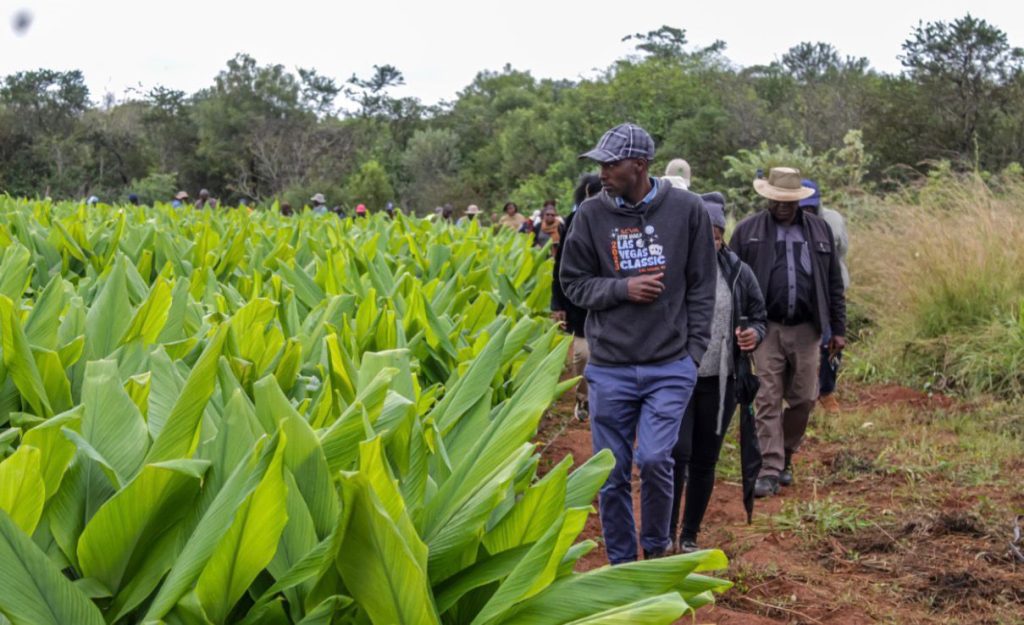
Farmers touring the turmeric farm.
“Seed for turmeric, particularly the Lacadom variety is expensive. We managed to negotiate with the seller and paid US$3500 for one tonne which only covered half a hectare. To fully utilise a hectare, we would need about two tonnes.
“We cannot do this individually. We need to unite as farmers, produce in bulk and secure the necessary certification to export. The export market requires volumes exceeding 200 tonnes,” said Njavha.
Njavha added that their turmeric is grown organically to align with the global demand for organic produce. The crop matures in seven to nine months and farmers can also earn income along the way by selling turmeric leaves for herbal tea.
He has a 16 hectare farm and only able to utilise seven hectares owing to resource shortages.
“Production remains labor-intensive with most work such as digging trenches and applying manure done manually due to lack of machinery.
“We have the land and the vision but we lack equipment and funding. With support, we can scale up production and contribute significantly to exports,” he said.