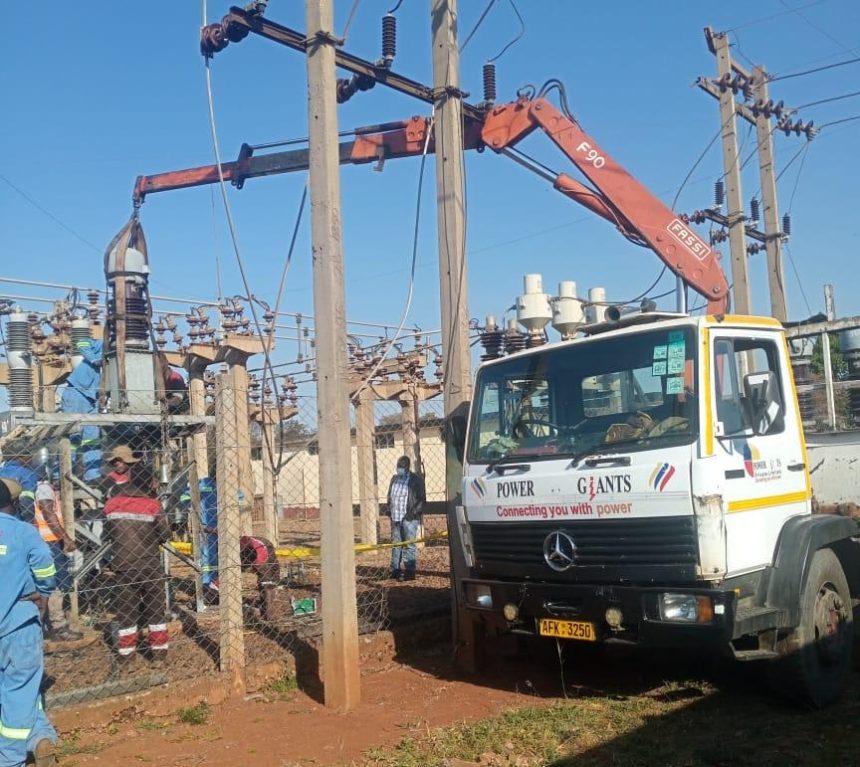
In the realm of High-Voltage (HV) power systems, inefficiency is not merely a theoretical concern; it is a measurable, physical energy loss. It manifests clearly as thermal dissipation in transformers, unpredictable voltage drops, frequency instability and the tragic underutilisation of generation capacity.
Similarly, incompetence is rarely just a personnel issue, it is a systemic hazard embedded in poor planning, sluggish execution and a persistent disregard for fundamental engineering principles.
Energy systems do not collapse suddenly; they deteriorate gradually, eroded by the slow accumulation of tolerated inefficiencies and uncorrected errors.
To secure our energy future, we must stop viewing the grid as a political instrument and start treating it as a precision-engineered ecosystem.
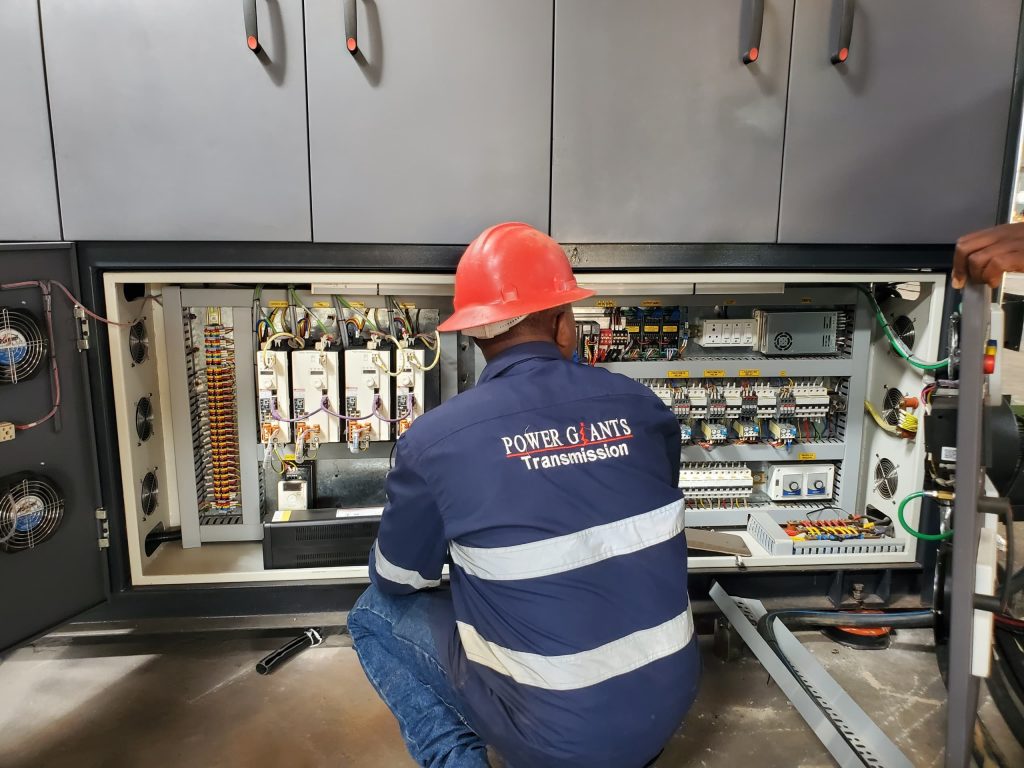
Paying attention to faults on time saves mighty losses.
In this environment, every decision must be governed by the uncompromising laws of physics.
The path to a stable, efficient grid begins with a commitment to data-driven decision-making. Modern power grids must function as closed-loop control systems. Without high-integrity data — derived from load flow studies, fault analysis, and real-time system monitoring — the grid remains stubbornly reactive.
By shifting from intuitive operation to predictive modeling, utilities can optimise transformer loading and stabilise voltage profiles, effectively preventing outages before they manifest.
Zimbabwe must also aggressively tackle the silent killers of utility profitability: technical and non-technical losses. Technical losses, caused by resistance in conductors and poor power factor, can be mitigated by upgrading infrastructure and utilising advanced tools like Static Var Generators (SVGs).
Simultaneously, non-technical losses, such as metering inaccuracies and theft, must be eliminated through the implementation of smart metering and strict grid integrity enforcement. The impact is significant; a modest one-percent reduction in system losses often recovers enough capacity to power a small city, achieving what would otherwise require a costly new power plant.
True modernisation requires moving beyond manual control, which is fundamentally incompatible with the complexity of today’s grids. We must fully deploy Supervisory Control And Data Acquisition (SCADA) for real-time monitoring, Energy Management Systems (EMS) for optimal dispatch, and Distribution Management Systems (DMS) for feeder control.
Furthermore, installing smart protection relays with adaptive settings allows for fault clearance in milliseconds, providing the critical stability that only speed can offer.
This technical progress must be supported by the preservation of institutional memory.
When experienced engineers leave without having mentors juniors for effective knowledge transfer, the system suffers from “operational amnesia,” leading to the repetition of costly mistakes.
By implementing centralised engineering databases and structured mentorship programs, we can treat institutional history as vital configuration data, ensuring that the lessons of the past inform the stability of the future.
Competence must be treated as a non-negotiable pillar of engineering. Because incompetence scales—where a single incorrect relay setting can destabilise an entire transmission corridor, Zimbabwe must move away from tenure-based roles toward strictly competency-based standards. This requires mandatory continuous professional development, rigorous technical re-assessments, and quarterly independent audits to ensure that those designing and supervising projects are operating at the peak of their craft.
The country is entering an era where decentralised systems, such as solar mini-grids, industrial embedded generation, and battery energy storage — must be intelligently integrated into the national fabric. This is where smart inverter technology becomes transformative, particularly for a developing nation like Zimbabwe.
By acting as the “brain” of renewable installations, these devices move beyond simple power conversion to provide active grid support.
In a grid like Zimbabwe’s, which often faces supply-demand imbalances, smart inverters provide five critical stabilising functions:
Dynamic Voltage Regulation: When grid voltage sags or spikes due to localised loading, smart inverters can inject or absorb reactive power to bring voltage levels back within safe operating bands.
Frequency Ride-Through: Unlike legacy inverters that disconnect immediately during a disturbance, smart inverters can “ride through” transient frequency fluctuations, preventing the cascading trip-offs that lead to national blackouts.
Active Power Curtailment: During periods of low load, smart inverters can automatically modulate their output to prevent solar-induced voltage rises, protecting downstream distribution equipment from thermal stress.
Anti-Islanding Protection: They instantly detect a utility grid fault and disconnect the solar system, ensuring the safety of linesmen working to restore power without the risk of back-feeding.
Grid Code Synchronisation: They ensure that decentralized solar assets adhere strictly to national grid codes regarding phase, frequency, and harmonic limits, creating a harmonised, resilient grid environment.
Coupled with a transition from reactive to predictive maintenance, this technology allows us to eliminate risk through data intelligence.
Rather than waiting for equipment to fail, we should utilise condition-based monitoring, such as thermal imaging of busbars and oil analysis in transformers, to ensure infrastructure reaches its full lifecycle.
Ultimately, energy policy must align with the realities of physical systems. Policies that ignore engineering constraints create instability, as electricity does not respond to political ambition or market slogans—it only responds to design. We must prioritise grid reinforcement before expansion, enforce cost-reflective tariffs, and invest heavily in human capital development. We need a new generation of engineers capable of mastering both classical power systems and digital automation.
Energy sovereignty is not achieved through generation alone; it is realised through execution. By fostering regional interconnectivity, industrialising our energy value chains, and manufacturing core components locally, we can transform our resource abundance into national strength. Disrupting inefficiency is not an optional upgrade — it is an engineering necessity. A nation’s energy stability is directly proportional to its engineering discipline. We must commit to a culture where precision, data, and competence define every kilowatt.
Electricity does not negotiate; it obeys physics. Therefore, only absolute technical discipline can power a nation into the future.
The opinion piece is adapted from an original series by Engineer Dr Edzai Kachirekwa
Group Executive Chairman, Power Giants Group
Feedback: [email protected]