CATHERINE MUROMBEDZI CORRESPONDENT
Medical stakeholders are pushing to update Zimbabwe’s outdated laws on medical advertising, which have been in place since 2000.
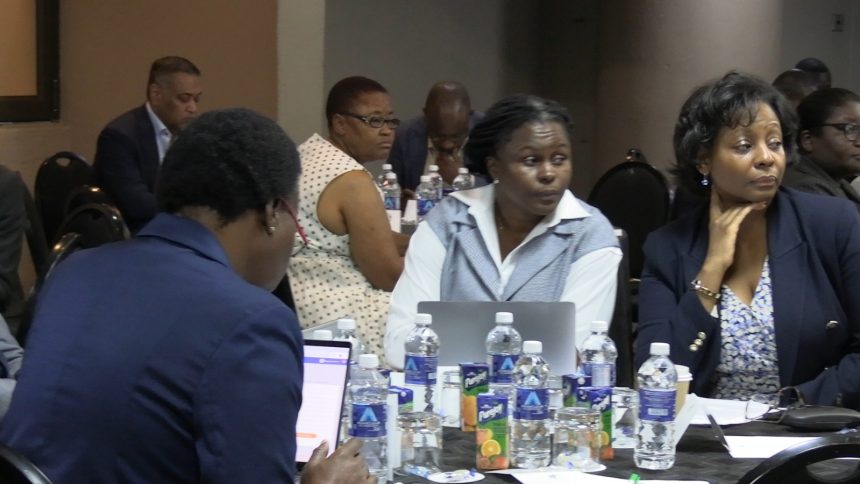
The Ministry of Health and Child Care (MoHCC) recently met with various professionals from various fields, including dentists, nurses, doctors, medical insurance leaders, environmental health experts, radiologists and many others. The aim was to align the regulations with the current digital landscape. The media, an important stakeholder, was invited too to keep the tabs in the public space.
Tonderai Kadzere, Director for Policy, led the deliberations, emphasizing the need for clarity in medical advertising.
“The absence of clear and harmonised standards can lead to inconsistency, regulatory gaps, and potential harm to the public,” Kadzere said.
The meeting had a starting point, a draft from 2017, which was revisited and amended to suit the current dynamics of the global world, internet, social media broadcasting, and artificial intelligence.
“The Ministry of Health and Child Care does not dictate; it listens to the voices of the people. We have reconvened to look at the laws governing medical, healthcare advertising. It is a crucial moment to align with reality,” Kadzere said, highlighting the need for expert input to create a new Statutory Instrument (SI) that aligns with health legislation and protects the public from misleading claims.
The current laws have resulted in Zimbabweans not knowing what is available at home.
The local medical field, through the Private Public Partnerships (PPP) has rebound and now matches the services abroad. Because the locals read and know more of India, South Africa and others, they are flying out seeking medical treatment abroad. With the medical flight, the country is losing approximately US$400 million annually. Patients are often unaware of available services at home due to the advertising restrictions.
“Millions of dollars are lost as patients seek services that are available locally. They do not know because we are not allowed to inform them what we do,” one participant bemoaned.
Dr Johannes Marisa, President of the Medical and Dental Private Practitioners Association of Zimbabwe, described the regulations as “punitive” and called for a framework that allows practitioners to advertise their services ethically.
“We need to be in tandem with global trends and move with the times in healthcare advertising,” Dr Marisa said.
Dr Vivek Solanki, highlighted the unfair competition from foreign agents who advertise freely, offering incentives to doctors for referrals.
“Foreign agents come to Zimbabwe unhindered, advertising through conferences and offering doctors incentives for referrals. They give commissions and advertise freely with ‘before and after’ pictures and hospital lists. Because we are not allowed to do that,o we are unable to compete or get known on the global field,” he said.
“We are now a global village; we have to be out there with the rest of the world. We have the experts and tools to provide world-class care, but we need the shackles loosened to compete. We must be able to ethically advertise our services to Zimbabweans and people outside the country. This is where social media, websites, billboards, and podcasts come in. These marketing tools would enable Zimbabwe to stand on the world stage of the health sector,” Dr Solanki added.
One private practitioner noted that the draft regulations ignore the reality of 2026, where telemedicine and artificial intelligence are transforming healthcare. “The regulation must speak to the dynamics of medicine in the global village,” she said.
“We are being punitive. How will locals know if images or testimonials are prohibited? Consumers everyday see the success of the health facilities abroad. Capital flight will continue while we are concerned with ‘dignity’. This draft is not even talking of artificial intelligence, (AI). Right now, telemedicine is taking over while we remain clinging to archaic regulations.”
Mrs Clotilda Chimbwanda, Secretary General of the Healthcare Professions Authority (HPA), called the meeting a milestone but warned of the work ahead.
Its either Zimbabwe moves in tandem with the dynamic world or it gets frozen in the past.
“Addressing the information gap in the medical sector is important, but it must be done within clearly defined parameters. Looking at the draft, there are sections which are vague and need to be aligned. The draft has no mention of AI, no social media, this is the digital world. Everythinv has gone digital, we too ought to do so with urgency,” she said.
The meeting concluded with a sense of urgency, with stakeholders calling for a well-informed patient population. As one speaker put it, “Knowledge is power, and a well-informed patient is a safer patient.”
The Southern Region, made up of five provinces, met a few days later in Bulawayo. The Northern Region indaba spoke in unison, emphasizing that knowledge is power. Ultimately, the focus remains on the patient. Zimbabweans deserve to know the quality of care available right at home rather than gallivanting across borders for services that exist in their own backyard.
● Feedback: [email protected]