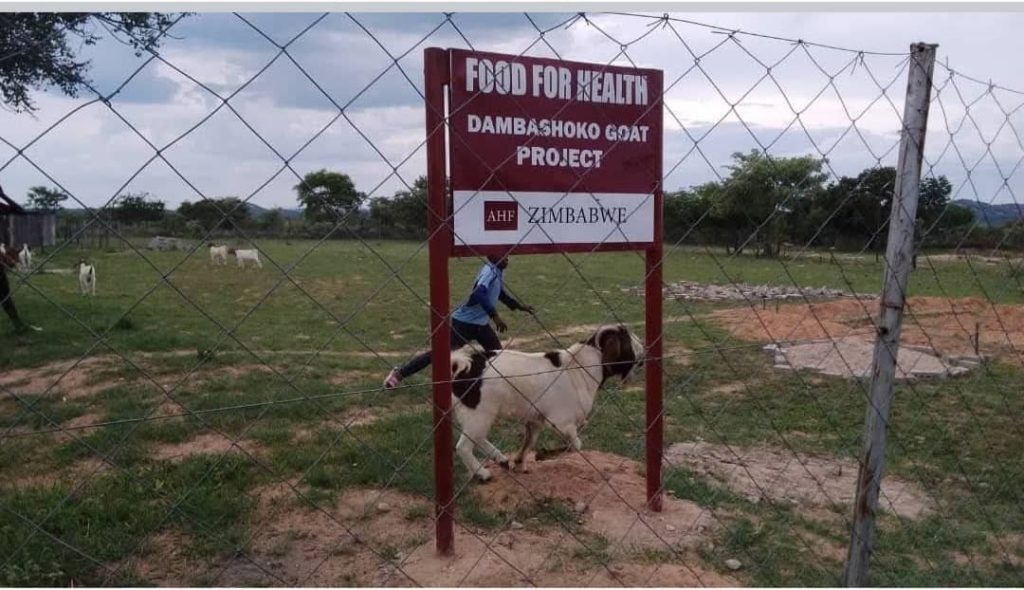
In a significant leap forward for sustainable development, AHF Zimbabwe has announced the arrival of 11 new members to its livestock family: 10 Boer Does and one high-quality Buck.
While they may just look like goats to a passerby, to the local community, they represent a path out of poverty and a cornerstone for long-term food security.
AIDS Healthcare Foundation (AHF) is a global not-for-profit organisation mitigating the HIV response. Because treatment success hinges on good health, AHF Zimbabwe is diversifying into this important arm of wellness. The Food for Health initiative isn’t just a charity programme; it’s a self-sustaining ecosystem. It is designed to empower individuals through the “pass-on” model of livestock ownership.
The transition from a “handout” model to a “production” model is a classic example of sustainable development.
AHF Zimbabwe’s shift from temporary food handout relief to sustainable resilience is a success story.
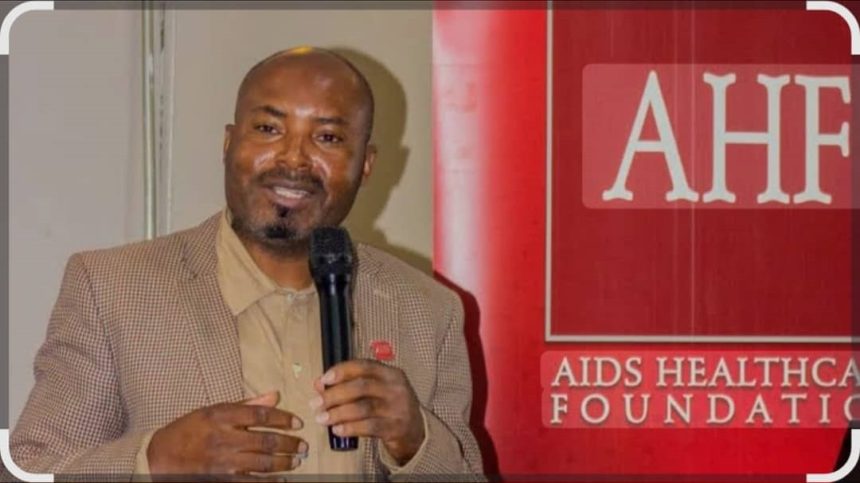
”The Boer goat programme in Dambashoko, Gwanda, is a cornerstone of our Food for Health Project,” explained Clever Taderera, Programmes Manager for AHF Zimbabwe.
“The core concept is a revolving fund designed to provide meaningful, long-term support to our clients. We recognised that purchasing food hampers with AHF funds was not a sustainable solution; instead, we pivoted towards goat rearing—a far more profitable and regenerative venture.
“By investing in high-quality Boer goats, AHF has created a self-sustaining cycle of wealth and nutrition. We utilise pure-breed Boer goats, valued at US$1,000 each, known for superior weight and health outcomes. Communities no longer need to travel vast distances to source elite breeding stock.
Last year, we distributed 18 goats to our members, retaining the remaining stock to ensure continuous breeding. Aside from direct distribution, we sell surplus stock to fund supplementary food handouts. Notably, after the initial capital injection, the project has required no further cash applications,” he said on the Boer goat programme.
Taderera went on to speak on the greenhouse projects.
“Taking a look at the Greenhouse Programmes that we run at some health facilities, we realised that community projects are successful. The logic of sustainability extends to our clinical facilities. At Sally Mugabe Hospital’s Centre of Excellence, we have established a 300-square-meter greenhouse on a generous land allocation from the facility.
”We harvest our produce and leverage the proceeds to purchase dry goods—such as beans and peanut butter—to support vulnerable patients identified by the health centre,” said Taderera. Similar initiatives are already thriving at Gweru and Mpilo Hospitals,” said Taderera.
”These projects serve as more than just production hubs; they are centres for community learning:
For technical expertise, We employ an agronomist for our greenhouses and a visiting Veterinary Doctor for the Gwanda goat project.
We value knowledge transfer. Clients are encouraged to visit, learn, and gain technical education from these experts.
“Onwards and upwards!”
isn’t just a slogan—it’s the
trajectory of a community that is no longer just surviving, but thriving through smart,
localised agriculture.
The impact stretches beyond the immediate beneficiaries, its a community wide benefit.
”In an era of funding constraints, we must think outside the box. We are moving beyond Gwanda to prove that healthcare providers can—and should—generate sustainable projects that empower the people they serve,” said Taderera.
The introduction of Boer genetics is a strategic masterstroke. Known globally for their muscular build and rapid growth, Boer goats are the “gold standard” of meat breeds. By integrating these animals into the project, AHF Zimbabwe is ensuring increased productivity.
“We settled for Boer goats because their offspring will reach market weight faster, providing quicker returns for the initiative.
Local farmers can access superior breeding stock within their own neighbourhood. This will elevate the quality of goats across the entire district,” said Taderera.
The ripple effect of empowerment sees the pass on scheme strengthening.
The beauty of this initiative lies in its cycle of generosity. Once the offspring are born, they are gifted to individual clients. This shifts the dynamic from temporary relief to permanent ownership. A single goat can become a small herd, and a small herd can pay for school fees, healthcare needs not catered for under the free treatment, and improved nutrition.
By offering these improved breeds at affordable prices to the wider community, AHF Zimbabwe is effectively democratising agricultural success. Better goats lead to better incomes for everyone, fostering a more resilient local economy.