CATHERINE MUROMBEDZI
CORRESPONDENT
In this educative series, awareness to Intersex persons is given through lived realities.
In Zimbabwe, public awareness surrounding intersex individuals remains an on-going and often misunderstood process.
For decades, intersex conditions have been conflated with the Transgender community, leaving many intersex individuals and their families navigating deep societal stigma, medical ambiguity and administrative erasure without clear information or targeted support.
To understand the intersex experience, one must first understand what it means to be intersex.
Intersex is an umbrella term used to describe people born with biological sex characteristics. These include chromosomes, gonads, or genital anatomy that do not fit typical binary definitions of male or female bodies. Unlike transgender individuals, whose gender identity differs from the sex assigned to them at birth, intersex individuals are born with natural biological variations.
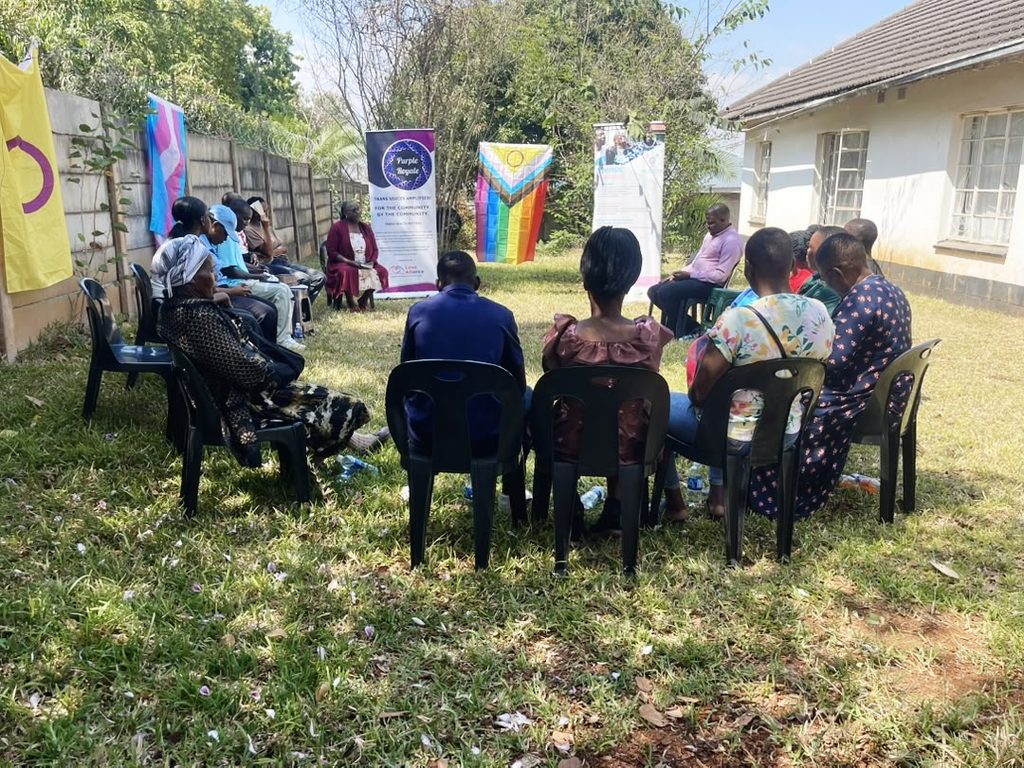
A Crucial Gathering: Mothers have been the main caregivers to intersex children. Breaking decades of isolation of this marginalised community has seen Trans Smart stepping into this gap.
Trans Smart Trust, an organisation amplifying the needs of the deeply marginalised intersex community across Zimbabwe on Thursday, convened a one-day engagement in Mutare, specifically for mothers raising intersex children.
Mothers travelled from as far as Chinhoyi in Mashonaland West, Buhera in Manicaland, and Mutare, bringing with them years of unheard struggles. With some mothers not knowing that they were not alone, the meeting became a pillar of support with phone numbers exchanged. The Buhera community already has a vibrant small support community. However, they all need support to run sustainable projects from home.
The sad reality of mothers who had spent decades believing they were completely alone in their predicament was visible throughout the meeting. Yet, the dedicated work of Trans Smart Trust over the last eight years has slowly yielded results, enabling disparate families and communities to finally discover and connect with one another.
From Buhera alone, six mothers attended, having gradually built a tight-knit support network among themselves.
Among them was Mai Nelson, whose 35-year-old son was born intersex. For her, participating in the workshop cemented a comforting realisation: right in Buhera, a supportive community now exists where once there was only isolation.
“Just Congratulations”: A Midwife’s Confusion and Thirty-Five Years of Secrets
Nelson’s story began 35 years ago at a rural clinic in Buhera. The attending midwife had no medical knowledge or training regarding intersex conditions. The standard, celebratory post-birth announcement—”makorokoto mwana wenyu musikana or mukomana” (“congratulations, you have a baby girl or boy”)—abruptly ended with just “makorokoto.”
That moment marked the beginning of a long, painful road of confusion. The nurse quietly informed Mai Nelson that her baby was born different, possessing both gender markers, admitting it was the very first time in her career witnessing such a condition.
“I was discharged like all mothers after a day of observation. On arrival home, congratulations messages poured, followed by munhui? (‘what sex?’)” Mai Nelson recalled. “There I stammered, where was I going to show everyone the genitalia? No, I avoided to answer that, further building the confusion cycle. Rumours started to spread, I had given birth to an evil child. I had strayed and this was my yoke to carry. Others whispered that I had been bewitched.”
At the time, the local medical field possessed minimal understanding of intersex variations—a reality that persists in parts of Zimbabwe today, where few grasp the complexities of the condition.
“I accepted Nelson as a boy despite having both gender markers. In Grade 5, he came back home crying. I later went to the school. He had for the first time had an epileptic fit. I was informed that he should stop attending school. Since then he has been at home and his favourite hobby is bird searching,” said his mother.
Institutional qdvocacy and the push for official recognition is bearing fruits.
Highlighting the structural challenges facing families like Mai Nelson’s, Gumisai Bonzo, Executive Director of Trans Smart Trust, shed light on the massive work that still lies ahead.
“More hands are required to turn the overwhelming tide in the intersex community. Little information and data is available and it makes programming difficult. We are in the process of collecting data and last year we did a documentary. We were partners leading the government to recognise the need for a third gender marker. The Registrar General’s office has been supportive and we are working very well with them in processing identity cards for the intersex community,” said Gumisai Bonzo.
This advocacy work at the grassroots level mirrors growing momentum within Zimbabwe’s legal system. A landmark Zimbabwean High Court challenge by seven intersex applicants has prompted high-level government research, driving urgent legal reforms toward bodily autonomy, non-consensual surgery bans and official third-gender recognition.
Taking a cue from nations with resources, Zimbabwe is slowly making strides to give corrective surgery. However, the cost is prohibitive to many.
In resource-wealthy nations, healthcare systems approach intersex conditions through multidisciplinary teams comprising specialised endocrinologists, genetic counselors, pediatric urologists, and specialised psychological support services.
Rather than rushing into irreversible non-consensual surgeries at birth, advanced medical frameworks emphasize comprehensive diagnostic testing, patient bodily autonomy, clear parental counselling, and legal protections that prevent discrimination while providing flexible birth registration mechanisms.
This too has now been the approach by Zimbabwe.
Nelson’s experience illustrates the steep economic barriers faced by rural Zimbabwean families. Having dropped out of primary school in Grade 5, Nelson has known safety and security only around his mother.
“When I was coming here, Nelson asked why Mai Bonzo had not invited him too. I know he is troubled right now and is waiting for my return. As for medical procedures Murambinda Hospital has since decades ago referred me to Sally Mugabe Hospital but I do not have the money to travel. Nelson could be a family person today but he remains a minor,” said his mother.
Despite 35 years of delayed care, concrete steps can still transform Nelson’s quality of life.
Accessing specialised medical evaluations at central facilities like Sally Mugabe Hospital could provide clear diagnostics regarding his hormonal and physical health, alongside proper medical management for his condition.
The mothers bemoaned the out of pocket costs to Harare as a barrier.
Beyond clinical care, connecting Nelson to adult peer support networks, tailored vocational training and formal civil documentation would restore his dignity—ensuring he is no longer confined to isolation, but enabled to participate meaningfully in society.
Two years ago, Nelson received financial support to purchase a single she-goat—a modest intervention that has since transformed his daily life. Today, that single goat has multiplied into a thriving herd of six. Beyond providing his family with a constant supply of nutritious milk, the livestock has become a direct source of income, with Nelson already selling one goat to meet household needs.
Now a dedicated young livestock keeper, Nelson spends his days tending to his animals in the grazing fields. Reflecting on the change in her household, Nelson’s mother expressed profound gratitude for the support received from Mai Bonzo, noting the broader potential of such targeted assistance.
“If only Mai Bonzo could help more needy children, our lives would change for the better,” she said.
Medical referrals and legal recognition mean little if economic hardships prevent rural families from accessing them. The progress forged by grassroots partners like Trans Smart Trust and forward-thinking government offices provides a promising blueprint, but the momentum must not stall.
Bridging the gap between policy and practice requires implementation through subsidised specialieed healthcare, inclusive documentation and community-level education as is an essential necessity.
Trans Smart Trust is calling for partners to fund these crucial procedures. All the mothers who gathered in Mutare have no ability to sponsor the corrective surgeries.
Only when systemic barriers fall will intersex Zimbabweans transition from merely surviving in isolation to truly thriving in society.
Feedback: [email protected]