MORRIS BISHI
BIKITA – Chief Mazungunye’s area in Bikita is enjoying the windfalls of a partnership between Bikita Rural District Council and USAID that has brought clean water close in seven villages.
The water harvest has also allowed the birth of a two hectare irrigation scheme which is yet to start functioning.
The project which is located in Headman Masasire under Chief Mazungunye’s area in Ward 19, some 15km east of Nyika Growth Point was carried out through International Medical Corps (IMC).
There are seven villages or 500 people that are benefitting from the project.
Under the agreement Bikita RDC provides oversight while USAID funded the project. IMC, a non profit humanitarian organization then provided training to the community and implemented the project.
The project which was implemented in 2025 saw IMC rehabilitating a borehole and replacing it with a modernised one.IMC also installed two 10000litre tanks for water storage. In addition, IMC installed pipes stretching up to 700 metres from the borehole towards the villages, thereby reducing the distance that villagers walk to fetch water.
The project also feeds an automated livestock drinking pond, ensuring reliable water supply for both people and animals.
Women are the most relieved. Distances of up to 2km to fetch water and long queues at the borehole are gone, leaving them with more time to do other chores.
Vimbainashe Ngavi, a villager said the project has transformed life in Masasire Village and surrounding communities.
“When I got married in Masasire Village in 2009, there was one borehole serving seven villages. I walked nearly 2km to fetch water and we always had long queues. Women, children and the elderly spent hours waiting to get water,” said Ngavi.
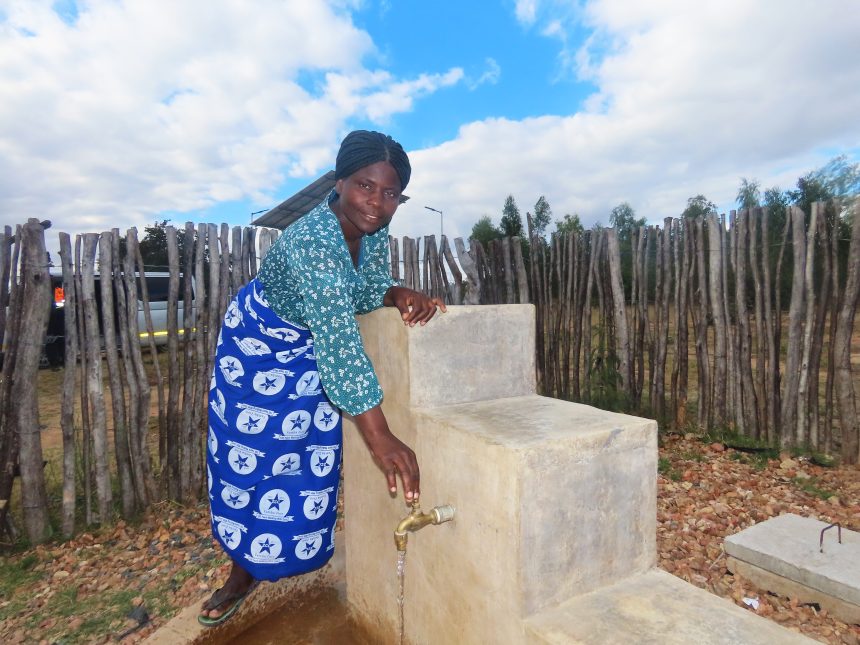
She said five surrounding villages now receive clean water through communal tap stands connected to the rehabilitated borehole.
“Fetching water is easy. Women have more time for household chores and other productive activities. Children no longer spend hours in queues at the borehole before or after school,” she said. Ngavi said the project has also transformed livestock production.
“We used to take our cattle and goats up to 10km to Chivaka River to drink water. The automated livestock pond ensures that water is available for our livestock throughout the year,” she said.
The community plans to construct a dip tank connected to the same water source, she said.
She said the long distance to waterholes increased the spread of diseases as cattle from different areas mixed in the process.
Village head Masasire born Cletus Mudzidzwa said villagers dug trenches for pipelines linking five villages to the main water source.
“The project has eased water shortages in our communities. It is powered by solar energy, has two 1,000-litre storage tanks and five communal tap stands supplying five villages,” said Mudzidzwa.