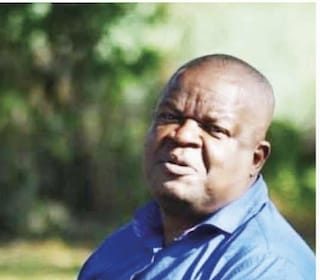
MASVINGO – Masvingo Province’s economy has shifted from retail and wholesale to agriculture-driven as Resident Minister, Ezra Chadzamira took decisive steps to put into use the region’s water bodies which account for 54% of the country’s total.
Increased agricultural output, noted, Permanent Secretary Admore Pazvakavambwa in an exclusive interview with Masvingo Mirror is the key reason why Minister Chadzamira was adjudged the Best Minister of State at The President Awards for Performance Excellence in Service Delivery held at Rainbow Towers in Harare last week.
Also winning the Best Permanent Secretary of the Year Award was Pazvakavambwa who leads the executive arm of Chadzamira’s office.
Focus on optimum use of water bodies has seen over 10 large investors turning up at Tugwi Mukosi, the country’s largest inland dam to start sugarcane and citrus fruits plantations. The projects are going to make a big turnaround on the country’s fruit production.
Chadzamira’s refocus on agriculture saw the province producing 296 000 metric tonnes of grain against the Province’s consumption figure of 96 000 metric tonnes. This leaves an excess of 100 000 tonnes. Wheat output saw a boom and an improvement from 1, 5 tonnes per hectare to 3 tonnes per hectare.
One of the key impacts of the good performance of agriculture was to reduce hunger prone homesteads from 50% to just 15%, according to Dr Pazvakavambwa. The 2025 Crops, Livestock and Fisheries Assessment Report confirms the upswing in agriculture and states that Masvingo contributed 34% of the nation’s traditional grains.
The impact and success of the projects presided over by Chadzamira’s administration is also corroborated by independent research institutions including Africa University (AU), 2025 Crops, Livestock and Fisheries Assessment Report and the Zimbabwe Livelihoods Assessment Committee (Zimlac) 2025 Report and Zimbabwe National Statistics Agency (ZimStat) reports.
An independent citizen satisfaction survey carried out by Africa University (AU) also put the Minister Chadzamira’s approval rating at 70%.
Masvingo also saw numerous value addition investments coming on stream and this includes a multimillion US$ processing plant for sesame and paprika in Mwenezi and the produce is for export.
There were also investments outside agriculture with a total value surpassing US$120 million. These include the refurbishment of Buffalo Range Airport, the construction of a US$1 million visitors centre at the Great Zimbabwe Monuments.
On the welfare side, Chadzamira saw more than 1 000 boreholes being sunk in Masvingo in 2025 alone. In Education 85% of the pupils now walk less than 5km to school while 70% of patients walk less than 10km to clinics.
“We sat down and agreed that we have 54% of the nation’s water bodies and agreed that our economy has to speak to our endowments. Retail and wholesale contributed 19% and we needed to change the complexion and yes our efforts paid dividends.
“We changed that and our key economic driver is now agriculture which now talks to our endowments having agriculture as our key driver opens many opportunities as manufacturing which is now the second biggest economy driver. We now have a rich diet diversity in our households.
“We opened a multimillion dollar paprika and sesame processing plant at Mwenezi Industrial Park. The produce is being exported. The 2025 Crops, Livestock and Fisheries Assessment Report states that Masvingo contributed 34% of the nation’s traditional grains.
“As a province we used to have 50% of food insecure households and as of April 2025, that fell to 15%. We produced 296 000 metric tonnes of grain and we only require 96 000 metric tonnes, the excess was used to feed the food insecure households. Our wheat output increased from 1, 5 tonnes per hectare to 3 tonnes per hectare.
“Village business units were setup in almost all districts and over 1 000 boreholes, 85% of our residents access portable water and at least 80% walk less than 10km to the nearest health care facility,” added Pazvakavambwa.
Chadzamira hailed for ‘shifting’ Masvingo’s economy