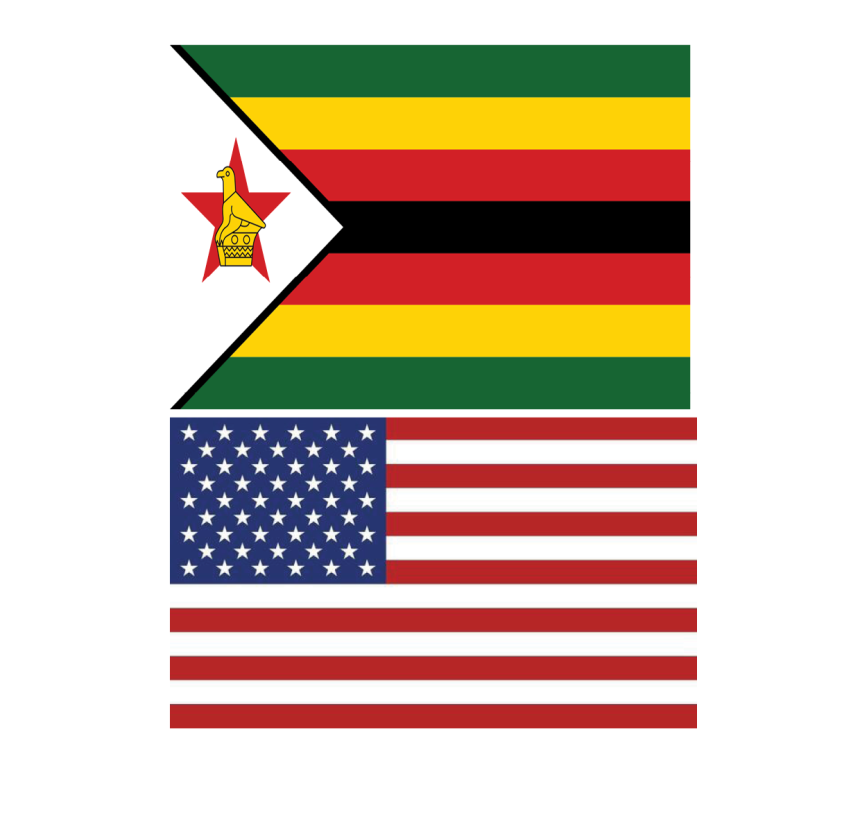
It has emerged that Zimbabwe halted a Memorandum of Understanding (MoU) bilateral health negotiations with the United States of America. Zimbabwe rejected the terms of the MOU worth US$367-million over five years.
Zimbabwe’s rejection of the US$367 million health funding agreement is a talking point nationally. With mixed feelings, the discussion is divided with some people living with HIV in panic mode.
Zimbabwe has 1.2 million people living with HIV.
Of these, 271 000 are supported by the US administration. The rest are supported by the Global Fund and other partners.
The National AIDS Council, through the AIDS Levy supports second and third line treatment.
The move by Zimbabwe highlights the country’s prioritisation of sovereignty and long-term sustainability over short-term financial gains.
The deal, which was part of the US’s America First Global Health Strategy, would have provided Zimbabwe with the much-needed financial assistance for healthcare initiatives, including HIV/AIDS treatment, tuberculosis, malaria, and maternal and child health. However, the government deemed the terms of the agreement to be “intrusive” and “one-sided,” citing concerns over data sovereignty and access to strategic mineral resources.
The agreement would have required Zimbabwe to share sensitive health data and biological resources, potentially compromising national security and undermining the country’s ability to benefit from medical innovations developed using its own resources.
For instance, the US could have gained access to Zimbabwe’s genetic material, which could be used to develop vaccines or treatments that Zimbabwe might not be able to afford or access.
This raises concerns about the country’s ability to protect its citizens’ health and well-being in the long run.
Moreover, the deal would have also given the US access to Zimbabwe’s strategic mineral resources, which are crucial for the country’s economic development.
The government was concerned that the agreement would perpetuate a neo-colonial relationship, where Zimbabwe would essentially be trading its resources and sovereignty for a relatively small amount of financial assistance.
In rejecting the deal, Zimbabwe’s government is sending a strong message that it will not compromise on its sovereignty and long-term interests.
The decision reflects a desire to prioritise multi-lateral co-operation and to seek partnerships that are equitable and mutually beneficial.
This move is particularly significant given the US’s withdrawal from the World Health Organisation (WHO) and its shift towards a more isolationist approach to global health.
This week, the US Embassy in Zimbabwe announced that the government of Zimbabwe “has communicated its decision to withdraw from negotiations” on the proposed bilateral health MoU.
“We believe this collaboration would have delivered extraordinary benefits for Zimbabwean communities – especially the 1.2 million men, women, and children currently receiving HIV treatment through US-supported programs,” said US Ambassador to Zimbabwe Pamela Tremont.
“We will now turn to the difficult and regrettable task of winding down our health assistance in Zimbabwe.”
The Zimbabwe College of Public Health Physicians (ZCPHP) has expressed concerns over the collapse of the US-Zimbabwe health deal.
They are citing potential risks to the country’s public health system. They are concerned that an abrupt discontinuation of US support could lead to treatment interruptions, increased disease transmission and drug resistance.
In a statement, ZCPHP urged the government to resume talks with the US, emphasizing that continued dialogue could resolve outstanding concerns while ensuring essential health services remain uninterrupted.
They are offering technical expertise to support renewed negotiations, prioritising the health and well-being of Zimbabweans.
“An abrupt discontinuation of such support could risk treatment interruption, increased transmission, the emergence of drug resistance, and additional strain on the health system,” the ZCPHP warned in a statement.
“Continued dialogue between both governments offers an opportunity to resolve outstanding concerns while ensuring that essential commodities and services remain uninterrupted as Zimbabwe gradually strengthens domestic financing mechanisms,” the College said.
The Zimbabwean government’s decision has been hailed by many as a bold move that prioritises the country’s interests and challenges the traditional donor-recipient dynamic.
It highlights the need for more equitable partnerships between countries and underscores the importance of prioritising national sovereignty and long-term sustainability.
The implications of this decision are far-reaching, and it will be interesting to keep note.
Zambia has also turned down the deal after initial reports had alleged it had inked the deal. Could the backlash had been the resultant if it indeed had accepted?
Kenya, which had accepted has been taken to court by a pressure group.
According to the UNAIDS, between 2018 and 2020, PEPFAR covered 32% to 42% of Zimbabwe’s HIV spending, the Global Fund 41%, while the government’s contribution was 2% to 12%.
Zimbabwe’s Aids Levy and Sugar Tax are crucial domestic funding mechanisms for healthcare. The Aids Levy, introduced in 1999, is a 3% tax on formal sector workers’ salaries, generating significant revenue for HIV/AIDS programs.
The Sugar Tax, implemented in 2018, adds a 1% levy on sugary products, aiming to reduce consumption and fund health initiatives.
To strengthen domestic funding, Zimbabwe could consider expanding the Aids Levy to cover more sectors, like informal workers or corporates. Increasing awareness and compliance could also boost revenue. For the Sugar Tax, broadening the scope to include other unhealthy products or adjusting the tax rate could generate more funds.
Transparency and accountability are key – ensuring funds are managed efficiently and effectively, with clear reporting and oversight, will build trust and maximize impact.
Strengthening these mechanisms can help Zimbabwe reduce reliance on external aid and maintain control over health priorities. The government could also explore other domestic funding sources, like sin taxes on tobacco or alcohol, or innovative financing mechanisms.
By prioritising domestic funding, Zimbabwe can ensure sustainable healthcare initiatives and protect its citizens’ health and well-being in the long run.
The Permanent Secretary in the Ministry of Information, on his X said Zimbabwe stands ready to work with all nations, including the United States, in advancing global health security, but will do so on terms that preserve its sovereignty.
The State Department has signed 18 bilateral global health MOUs with Botswana, Burkina Faso, Burundi, Cameroon, Cote d’Ivoire, Eswatini, Ethiopia, Kenya, Lesotho, Liberia, Madagascar, Malawi, Mozambique, Nigeria, Panama, Rwanda, Sierra Leone, and Uganda.
The sums vary with some running over a billion United States dollars.
Only time will tell, but one thing is certain – Zimbabwe has taken a significant step towards asserting its independence and challenging the status quo.
It now needs to action the talk. Walking the talk.
The deal in its raw state would have been modern day neo coloniasm.
The future would have been put to debt over US$367 million.
Lets discuss this important topic.
Feedback: [email protected]